 Mihai - Cristian Ioniță
A new hybrid powertrain on the Austral 2025
One of the most important changes on the new Austral is the new mild hybrid engine, 1.3 liters 4 cylinders and 160 horsepower powered by a CVT gearbox, borrowed most likely from the folks at Nissan. This engine option isn't available throughout the entire continent, but only in a few select markets, including Romania.
The reason seems to be linked to stricter emissions regulations, because being a mild hybrid, this engine releases around 142 g of CO2 emissions per kilometer, compared to around 106 g for the full hybrid trim that we've tested.
I didn't get to try the mild hybrid model, but I will wait for it patiently when it reaches Romania, because I'm curious how it behaves on this car.
As far as the engine option I drove, it's the well-known full hybrid 200 version with 1.2 liters and 3 cylinders, featuring a 400-volt electric motor and the multimode gearbox. It's identical to the one I've seen on the Rafale a year ago, but the gearbox received some software updates that should make it smoother and faster to shift.
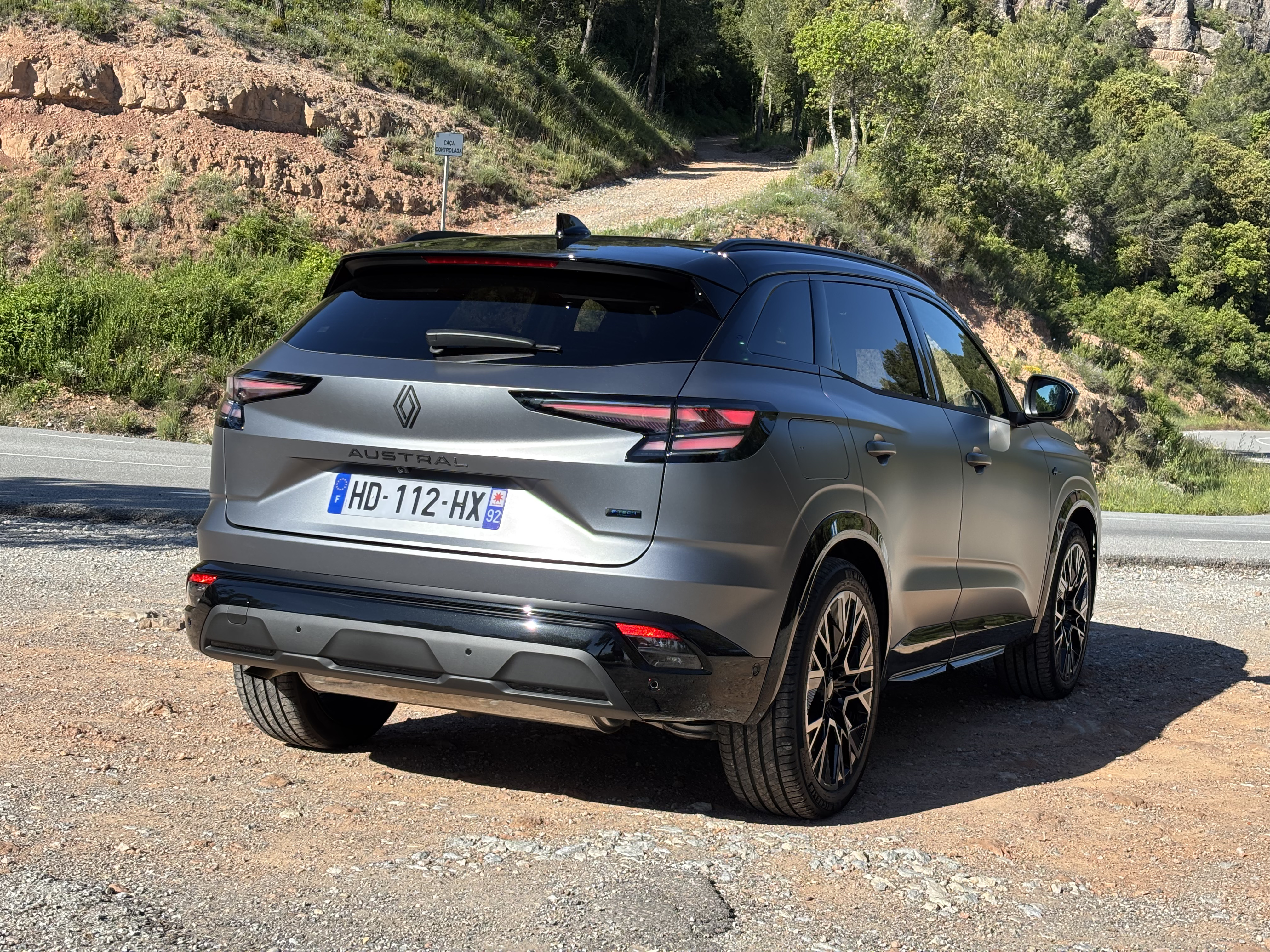
Specifically, Renault says that the new multimode gearbox should be more responsive to accelerate and there should be less delay, but it remains to be seen if that's really the case. I talked to one of Renault's engineers about this and he confirmed that there are modifications on a hardware level, as well, for the new Austral's gearbox, so that two new gears have been added, both for the electric and petrol engine.
So, the multimode gearbox on the new Austral has 3 gears for the electric motor and 5 for the gasoline one.
How is it to drive the new Austral full hybrid
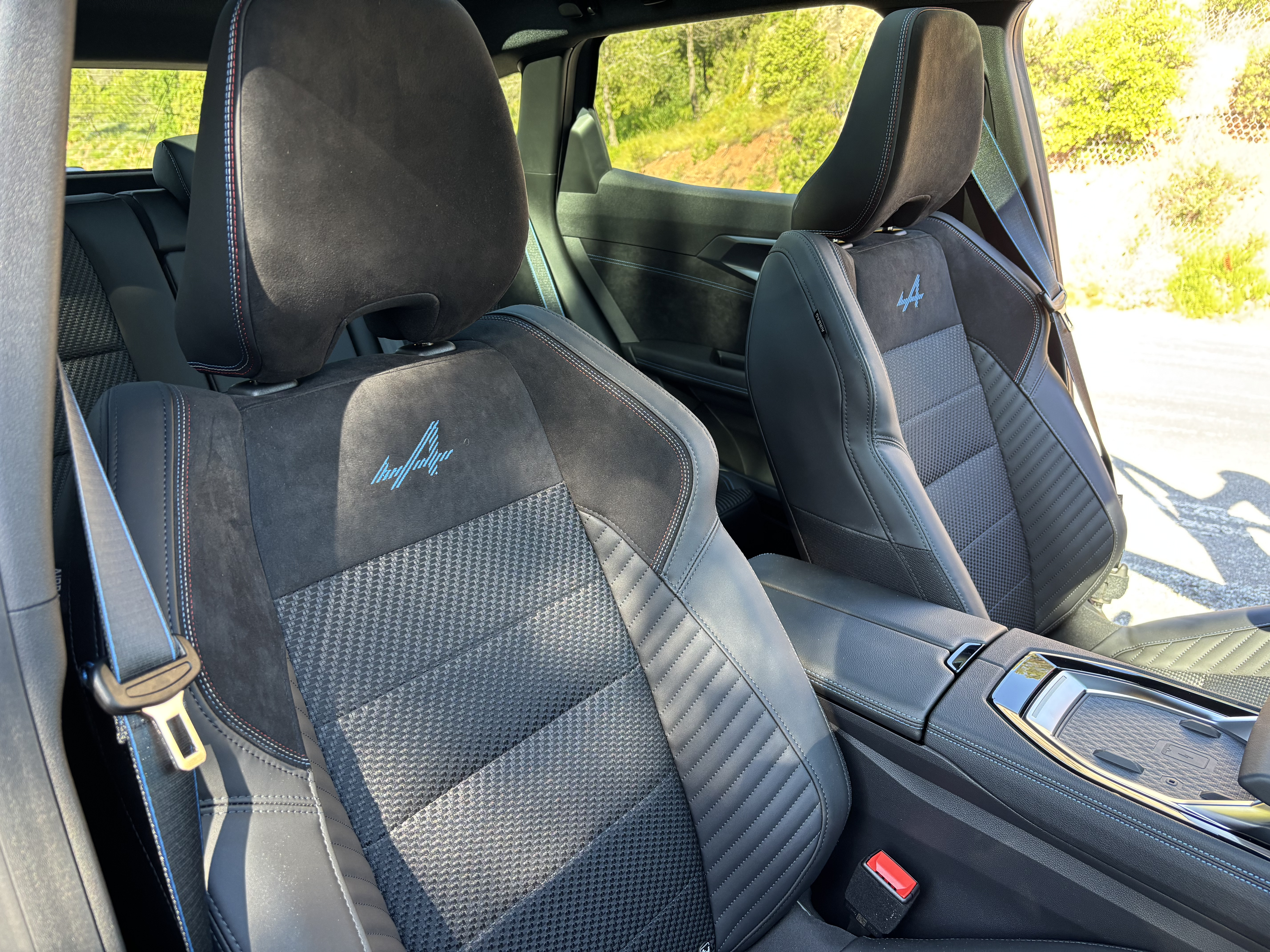
The first thing you'll notice are the seats on the Esprit Alpine version, which offer more side support compared to the previous version and are identical to the ones found on the Rafale.
For an added sustainability factor, Renault implemented 60% recycled alcantara on the seats for the new Austral, while the Techno and Evolution models benefit from textile seats made from 100% recycled contents. Also, 2024 was the year when Renault decided to ditch leather materials for the interior of all its cars.
Given all the updates brought to the powertrain, how does it feel to drive the new Austral? It's almost identical to the Rafale and this is a very good thing on multiple levels, while the new gearbox reduces the hesitations, but not entirely.
The reality is that, being a clutchless gearbox, it's very difficult to completely eliminate the delays and to make it suitable for a more dynamic driving style, but the improvements are noticeable. Firstly, the car responds more promptly when you press the accelerator harder, since it has more gears to play with in order to offer the perfect power balance, without revving the engine too little or too much.
If you drive it constantly, you won't feel the power cuts between shifts, which will become noticeable only when you kick down the accelerator and demand full power. The electric motor is still not able to completely mitigate this and you will still feel like you are "left powerless", until the gearbox shifts and you get the grunt from the 1.2 liter again.
Another thing that I've noticed is that, whenever you are driving and the petrol engine kicks in, you feel a slight jolt as the car pushes forward faster, despite having applied the same amount of pressure on the acceleration. This will happen especially in the sport mode, because in eco or comfort the phenomenon disappears.
What I liked is that, despite the battery being the same, the new Austral is able to run in electric mode for longer, even at higher speeds and even if you're climbing. The regeneration seems to be better itself, because I was not able to drop the battery below half unless I did consecutive acceleration sessions.
This translates to better fuel economy, if you drive the car for what it was built for, so at a normal pace and without too many fast acceleration sessions. From my experience, I was able to get a fuel economy of 7 l/100 km, but that's when I drove the car more dynamically, which caused the gasoline engine to start more frequently, but on normal driving, even when climbing, the fuel consumption dropped to around 6.5 l/100 km.
On the motorway, at a constant speed of 100 km/h according to the limits, the fuel consumption dropped to 5.9 l/100 km, a very good result for a C segment SUV, destined for families.
So, as it is the case for all Renault models equipped with this gearbox and engine combination, the car rewards you for a slower-paced and more economical driving, without completely ruling out a few acceleration sessions.
Austral is not the kind of car that you can do a short overtaking in, as it's not recommended to do that anyways, but it's for those that need space and comfort, but also a dynamic chassis and speaking of which, let's talk about how the new Austral feels around corners and winding roads.
The new Austral is more dynamic, but still comfortable and silent
Another important upgrade is the suspension, which was set up in such a way to improve dynamics and stability, without sacrificing comfort. The car that I've tested had 20 inch rims, so those with less rubber, but even so, the comfort was surprisingly good.
Speed limiters, the small and few potholes that I found along the way and the side of the roads which were a little abrupt, all were dealt with admirably well even in the sport mode and I am convinced that if the car was equipped with smaller rims, the comfort was even better. This is very important, since the Austral is a family-oriented car and so, comfort comes first.
The new Austral continues to deliver one feature available from the previous generation which favors dynamic driving and that is 4Control. 4Control, which is found on the Rafale, as well as the Espace (which isn't sold in Romania), is a standard feature that improves maneuverability and stability greatly. The system allows for the rear wheels to steer simultaneously with those in the front, making the car easier to control.
Also, compared to the previous model, the acoustic comfort was improved thanks to the better soundproofing around the engine bay, as well as the double windshield, which is also heated. You will hear the engine a little bit if you accelerate with all the power, but the noise from the outside is kept to a minimum, just like on the Rafale.
A panoramic sunroof is available as an option on the Austral, as well, although it is not a SolarBay unit, but rather it has a textile cover that can be electrically adjusted.
The climate system is a 2-zone model for the front passengers and it has a ventilation passage for those in the back, you have 2 USB-C ports in the front and another 2 in the back, as well as wireless charging support on the front center console, while the armrest is spacious, large and comfortable.
Basically, the interior is identical to that of the Rafale and among the comfort features I will mention the heated seats, steering wheel and the windshield, which is a must-have as far as I'm concerned and which heats the entire surface of the windshield.
Another interesting feature that I appreciated is that the seats have electric adjustments for both passengers at the front on the esprit Alpine version and the driver seat slides forward when you turn on the engine according to your settings and it also slides back when you turn it off, so you can get out of the car easier.
The boot space is 527 liters on the Austral and it can grow to over 1.700 liters with the backseat folded and you can buy an optional storage space that sits on the car's hook. Also, the new Austral has a towing capacity of 750 kilograms for a trailer without braking system or 1.500 kilograms for one with a braking system.
Safety features on the new Austral
The new Austral is one of the first Renault models to offer a new camera system, mounted on the car's pillar A, on the left side of the driver which permanently reads the driver's face in order to determine if you're tired and you might need a break or if you're not paying attention, as well as to access a personalized profile. So, when it recognizes the owner, the car will activate and deactivate specific ADAS features or comfort settings, after your preferences.
Besides this new camera, the car offers the same safety features like all other Renault models, such as front collision warning, assisted parking or emergency braking.
You can adjust the intensity of these safety features, how early or late they should activate and I like the fact that they are not very intrusive, not even the lane assistant, which seems more refined on the new Austral.
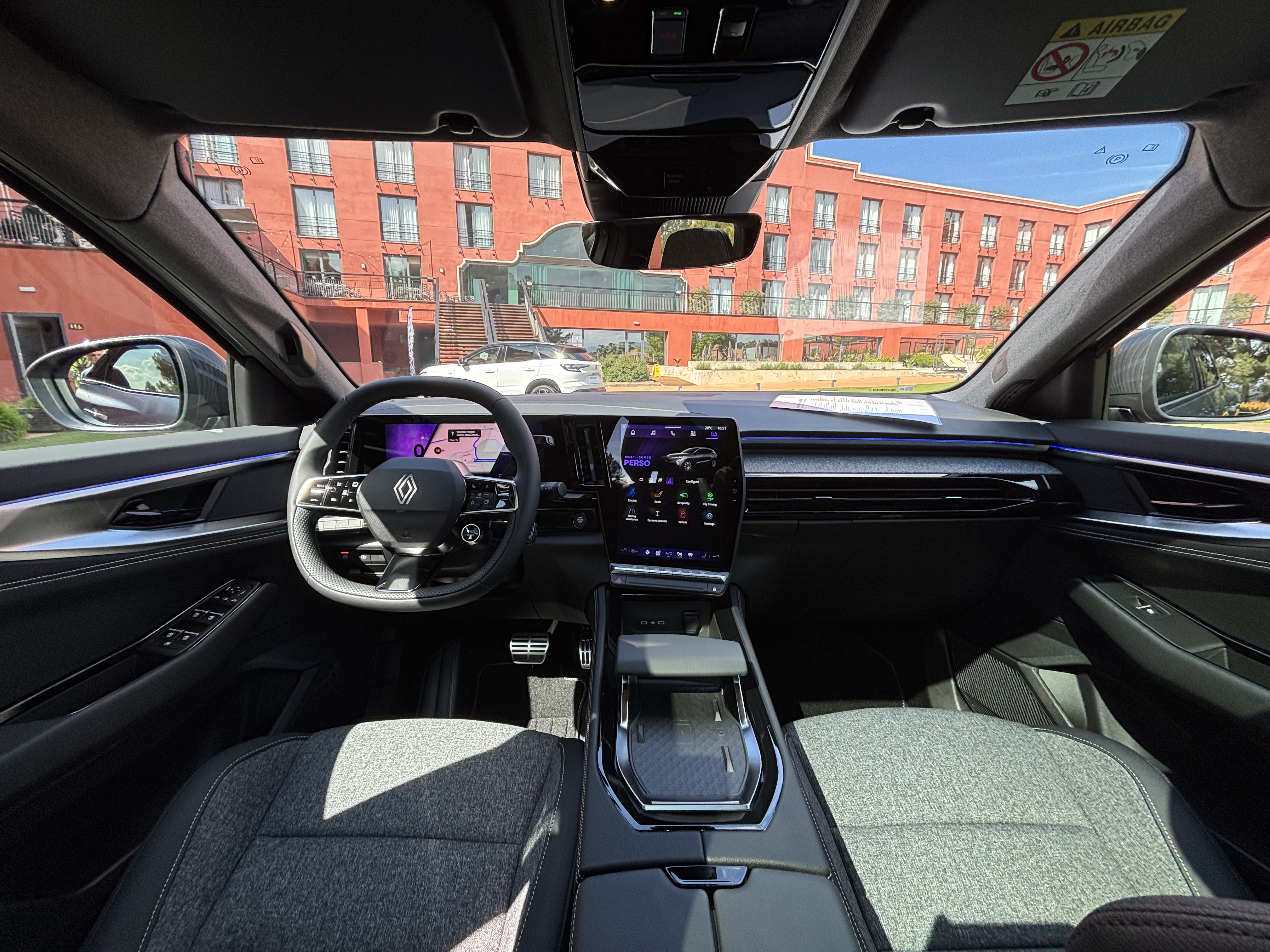
The car continues to benefit from the Google operating system for automotive and works just as fast and as fluid as always. The head-up-display is very bright and has a very good resolution, while the audio system is a 12-way Harman/Kardon unit, just like on the previous version or the Rafale.
Conclusions and price for the new Austral 2025
The new Austral comes at a starting price of 31.000 euros for the mild hybrid evolution trim and can reach 39.500 euros for the esprit Alpine version in full hybrid configuration, which was the one we tested.
As far as I'm concerned, the price is very decent for what this car has to offer, as it gives you a bit of everything. You have a good enough engine configuration for city driving, where the fuel economy will be among the best thanks to the full hybrid powertrain, but also for longer trips and vacations, even if it's not the sportier option on the market.
The interior space is very generous and the exterior size is fairly reasonable, although Austral wouldn't be my go-to option for an SUV destined almost exclusively for urban commutes, but for those that go outside the city at least during weekends.
The comfort is good thanks to the dynamic chassis and suspension, but which are doing a good job with mitigating potholes or indentations, as well as the heating and cooling options for the passengers and as far as the software goes, there aren't many alternatives on the market that are better than what Renault has to offer.
The Austral's main competitor is the Dacia Bigster, a model that we recently tested ourselves and which has a more attractive price, but also plenty of missing features available on the Austral. There are two cars belonging in the same segment, but that are meant for different target customers.
Compared to the Suzuki Across (Toyota Rav4), Austral is better suited for comfort and space, as well as the software and the dynamics, but it drops a few points when comparing the engine options.



Any thoughts?