 Mihai - Cristian Ioniță
Largely, the two versions of the Bigster that we've tested are similar, but there are a few differences regarding the engine options. Some of the differences are also based on the trim levels, Journey or Extreme. You can read the test drive for the mild hybrid Bigster here, where you'll find out more about the car, in general.
The biggest difference between the full hybrid and mild hybrid Bigster
The most important and biggest difference between the two Bigsters is the propulsion option, which on the full hybrid model is made of a 1.8 liter gasoline-powered engine in 4 cylinders and a 48 horsepower electric motor with 205 Nm of torque for a total power output of 155 horsepower. This makes it the most powerful Dacia vehicle ever (we're talking about series models here) and this propulsion option brings a suite of advantages with it.
Compared to the mild hybrid engine option, standard across the whole Bigster range, which offers a 3 cylinder engine with a turbocharger, the full hybrid model is more balanced, being 4 cylinder and without a turbocharger. This means that it is simpler, more reliable and more suitable for a larger SUV that weighs at almost 1.5 tons. Instead of a turbocharger, you have a more powerful electric motor here, identical to the one you'll find on the Jogger or Duster 3, for example, and which is permanently active, regardless of the speed.
I think that such a propulsion system is more beneficial to have on a car, because the electric motor has an instant response and it offers that immediate boost of power that you are looking for when overtaking, followed by the gasoline engine less than 2 seconds later, which picks up the pace at an accelerated rate.
Another advantage that this propulsion system offers is better fuel economy, which can be even more than 2 liters per 100 kilometers lower, despite the fact that the gasoline engine has one more cylinder and the car is heavier. This is also thanks to the electric motor, which is able to move the car itself at speeds of slightly over 50 km/h. The one found on the mild hybrid model can't do that and it always needs the participation from the fossil-powered engine.
So, the full hybrid version can be driven at lower city speeds in electric mode only if the battery is sufficiently charged, which contributes to lower fuel consumption at lower speeds and the comfort is also better, as the electric motor is silent, vibration-free and smoother.
The fuel consumption registered by the mild hybrid version was 7.1 liters per 100 kilometers, while with the full hybrid I got an average of 3.9 l/100 km, but as I wrote in the initial test drive, the results are not relevant, because one result was after a lot of climbing, while the other, after plenty of descending.
Still, I have plenty of experience with the full hybrid engines from Dacia-Renault to be able to tell that these models are indeed very efficient, especially when you drive them around the city or when descending from a high ground.
Exclusive options on the full hybrid Bigster
If you opt for the full hybrid model, Bigster could come with a few nice extras, such as the adaptive cruise control, instead of the standard one on the mild hybrid. This optional feature is linked to the multimode gearbox that you'll find on the full hybrid, while the mild hybrid comes connected to a 6 speed manual gearbox.
The only difference between the adaptive and the regular cruise control is that the first can adapt itself to the traffic conditions ahead of the vehicle and can apply braking or accelerate to the designated speed, while the standard one will only accelerate, so you need to brake in case of an emergency.

So, let's say that you are on the highway and you've set the speed to 120 km/h, but you are getting closer to a vehicle driving slower, let's say at 100 km/h that you can't pass right away, so you need to stay for a bit behind it. The full hybrid Bigster will apply braking to maintain a speed similar to that of that specific vehicle and when you can overtake, you will move to the speed lane and the car will start to accelerate by itself until it reaches 120 km/h.
Alternatively, you can take control, if you want to accelerate faster, because the cruise control will only apply around 50-60% acceleration power, so that it doesn't drive the fuel consumption too high.
This feature is a first for tha Dacia range, despite the fact that the Jogger and Duster 3 sport the same gearbox and a similar engine setup, so technically speaking, they are totally capable of using the adaptive cruise control feature, but Dacia engineers chose to use this option only on the new model.
The distance that the car maintains compared to the vehicle in front of it can be adapted on a few levels, depending on how close or far away you want to stay from it, in case of an emergency. This is an intelligent system, that can make Bigster feel like a modern car, belonging in 2025.
Bigster full hybrid also comes with regenerative braking features, available on the Jogger and Duster, as well as the Spring, also as a consequence of using an automatic gearbox. Thus, you can select the B mode on the gear selector, which will apply some sort of an engine braking, enabling a charging mode for the battery driving the electric motor. Also, since the drive battery isn't very large, at 1.4 kWh, you can let the car brake only for a couple intersections and you have enough energy to drive in pure electric mode for a while.
Comfort differences between the full hybrid and the mild hybrid Bigster
On a comfort level, the full hybrid is the more comfortable of the two models for the driver at least, since you don't need to shift gears yourself, and even for all the passengers, because the car is smoother to accelerate and it won't make any noise when driving in electric mode.
However, I feel like the mild hybrid version of the car is more comfortable when driving over potholes and road indentations, at least on the 4x4 model, because it has independent suspension on the front and rear axles, while the full hybrid only features independent suspension on the front and elastic beam in the back.
This means that the full hybrid tends to bounce around a bit more on the back side, which might be a bit more uncomfortable for passengers in the back, but the difference isn't that big. Personally, I would still go with the automatic full hybrid version for the more comfortable ride overall and the better fuel economy, given by the multimode automatic gearbox combined with the electric motor.
Still, the full hybrid bigster comes with another advantage, the larger front center console, which is taller and offers more cargo space, including a refrigerated unit in front of the two cup holders.
Where are the two Bigster models similar
Besides the engine options and the aforementioned exclusives that come with each of them, both Bigsters are identical and the extra features come only based on the trim levels, Essential, Expression, Journey or Extreme.
These can get you things such as the panoramic roof with the electric sunroof, the larger alloy rims, the 6-speaker Arkamys sound system or the electric boot door.
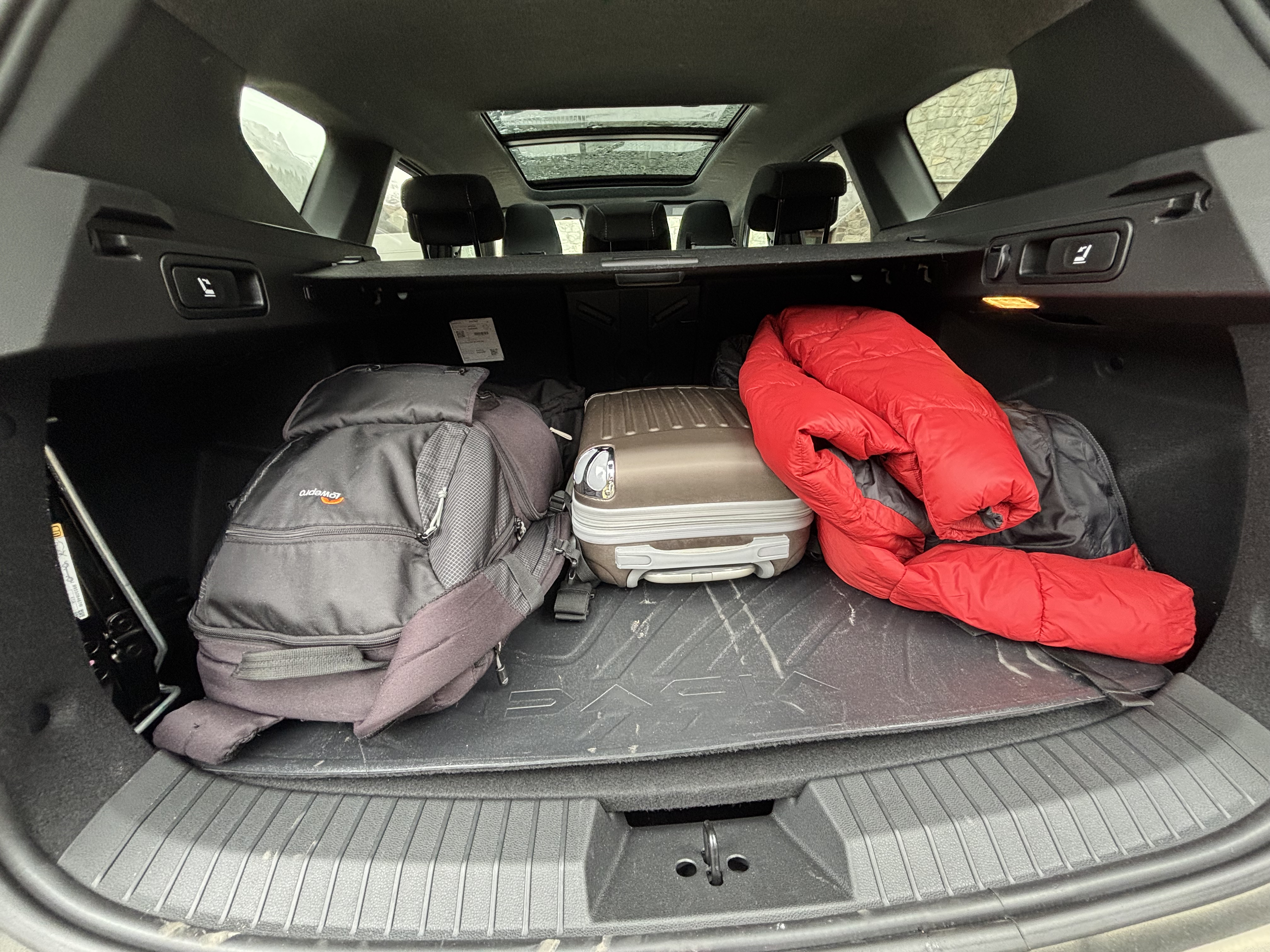
Other than that, the dual-zone climate control for the front passengers and with a ventilation passageway for those in the back is available on the mild hybrid and full hybrid Bigsters, just like you'll find the rear armrest, for which you'll have to sacrifice the mid seat. Technically speaking, the boot space will differ a bit, based on the engine option that you are picking, 4x2 or 4x4 mild hybrid or full hybrid 155, but the difference is 10-15 liters at most, so nothing that would drive you one way or another.
Also, very important for some buyers, there is a disk-based braking system on the back both for the hybrid 155 and the mild hybrid version, offering a very similar braking experience on both.
The steering is very similar, if not identical between the two, the ground clearance is the same, at 22 centimeters with both cars having the same number of cameras and sensors, which only add up based on the higher trims.
What to choose between the mild hybrid and full hybrid Bigster
The choice isn't as complicated as it may seem at first and it's agood thing that Dacia kept things as close as possible between the two, excluding what's entirely related to the engine options, to simplify the buying process.
So, I'll tell you what I'd personally buy: Bigster full hybrid, which is available from a starting price of 27.900 euros on the Expression version, with the upper trims Journey and Extreme available. I won't make a comment about the trim levels, which you'll choose based on your needs and preferences, but the engine options.
For driving in the city and on longer trips, excluding off-road sessions or with not too difficult off-road terrains, such as large rocks and a lot of mud, the full hybrid option is ideal for general comfort, for the driver's comfort and lower fuel consumption, especially at lower speeds.
It is also a simpler engine layout compared to the mild hybrid, especially for the gasoline-powered engine, which is in 4 cylinders and doesn't have a turbo, so the maintenance is easier and cheaper to do, while you don't need to pay that much attention to how you drive the car.
This is also the engine option that will offer you the adaptive cruise control, not essential, but of great help on a longer trip, as well as the additional and refrigerated storage space in the front center console at it might save you some spending on parking or get you a discount for the annual taxes.
But, if you're the adventure-type of person and you care about the off-road capabilities of a car, the 4x4 mild hybrid, which starts at 26.900 euros or 1.000 euros less, is the clear choice. It continues to deliver great comfort on longer trips, but requires more input from the driver, even with the cruise control activated, while the fuel economy won't take a complete nose-dive, but could be 1.5-2 liters higher per 100 kilometers.
However, the 4x4 Bigster is certainly more capable off the road and it has plenty of drive modes that you can select, depending on the type of terrain you are driving on and the independent rear suspension will offer better comfort for the passengers.

Still, you have to be more careful on how you drive the car, so you don't drive it at lower RPMs, where the engine and turbo will lose their reliability long-term. Also, after you drive faster, you'll have to let the car cool off for longer than the full hybrid version.
The same applies for the 4x2 model of the mild hybrid, which has the same engine as the 4x4 version.
Regardless of which version of the Bigster you pick, you'll buy a comfortable car, very spacious and at a correct price, but also only hybrid engine options, a first for Dacia, all those at a lower price than the competition.



Any thoughts?