 Mihai - Cristian Ioniță
Moreover, these projects have grid connection contracts already signed, according to data from REI, a group of companies specializing in attracting non-reimbursable financing through European funds and state aid.
Over 500 projects, totaling more than 1,500 MW of renewable energy and over 2,000 MW of battery storage REI Grup team has undeway.
"Since 2023, the authorities have been preparing a series of funding programs designed to stimulate investment in green energy, and in recent years we have seen a dramatic increase in applications through funding schemes, as well as in projects carried out independently. Estimates show that, at present, contracts have been signed for the grid connection of over 70,000 MW of new solar energy projects", according to Roxana Mircea, managing partner at REI.
Projects from recent years could become reality in 2026
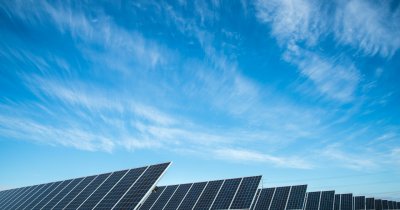
The projects were submitted between 2023 and 2025, or in preparation for 2026, through various financing programs made available by the authorities and mainly target investments in the photovoltaic field - photovoltaic parks or investments for own consumption (e.g. industrial buildings) - as well as battery storage.
"Over the past four years, we have contracted over 400 projects, both for the installation of new renewable energy capacities and for storage batteries, and over 100 other projects are in preparation to be submitted early next year through new financing schemes announced by the authorities. There is huge potential for development in this sector”, Roxana Mircea added.
Romania has the potential to be in the top 5 energy producers
Over 50% of the energy produced in the European Union comes from renewable sources, Eurostat data reveals . Thus, in the second quarter of this year, 54% of the net energy generated in the EU came from renewable sources, an increase of over 50% compared to the same period last year.
The increase was due to a significant development in solar energy, which generated a total of over 120,000 GWh. June was the first month in history in which solar energy was the main source of electricity generated in the EU.
Denmark (94,7%), Latvia (93,4%) and Austria (91,8%) are the EU countries with the highest share of renewables in total energy generation.
Romania is in the first half of the rankings, showing strong growth, occupying 11th place, ahead of countries such as Spain, Italy, Greece, Poland, Bulgaria, and France.
Eurostat statistics also show that the highest percentage of energy generated from renewable sources comes from photovoltaic panels (36.8%), followed by wind (29.5%) and hydro (26%).
Funds available for transport, energy and the automotive industries
Romanian entrepreneurs and foreign investors will have access to six financing programs in the coming period, with total allocations of over €1.5 billion, aimed at supporting production, transportation, logistics, energy production, and charging stations.
The funds can be used to replace production equipment, vehicle fleets, energy production, energy storage batteries, or charging stations for their own electric vehicles as well as for the public.
State aid scheme – PRO-INFRA – Replacement of old production equipment in factories
Total budget: EUR 200 million
Financing amount Valoare finanțare: max. EUR 15 mln. / beneficiary
Eligible applicants: micro-enterprises, SMEs, large enterprises
Economic operators carrying out production activities related to eligible NACE codes:
- NACE 0811 Extraction of ornamental and building stone, extraction of limestone, gypsum, chalk, and slate
- NACE 0812 Extraction of gravel and sand, extraction of clay and kaolin
- NACE 2320 Manufacture of refractory products
- NACE 2343 Manufacture of electrical insulators and insulating ceramic parts
- NACE 2352 Manufacture of lime and plaster
- NACE 2361 Manufacture of concrete products for construction
- NACE 2363 Concrete manufacturing
- NACE 2364 Mortar manufacturing
- NACE 2369 Manufacture of other concrete, cement, and plaster products
- NACE 2370 Cutting, shaping, and finishing stone
- NACE 2399 Manufacture of other non-metallic mineral products, n.e.c.
- NACE 2431 Bar cold drawing
- NACE 2432 Cold rolling of narrow strips
- NACE 2433 Production of cold-formed profiles
- NACE 2434 Wire drawing
- NACE 2511 Manufacture of metal structures and parts of metal structures
- NACE 2732 Manufacture of other electrical and electronic wires and cables
State aid scheme – Support for investments in the purchase of zero-emission vehicles for road and rail freight transport, maritime and inland waterway passenger and freight transport
Total budget: EUR 299 million / Average annual budget: EUR 149.5 million
Heavy goods vehicles: EUR 130 million
Rail freight vehicles: EUR 90 million
Maritime and inland waterway passenger and freight vehicles: EUR 79 million
Eligibility: projects falling under one of the following sub-measures are eligible:
- Sub-measure 1 - the purchase of heavy goods vehicles with a minimum gross vehicle weight of 3.5 tons, powered by an electric battery that can be charged and recharged only by connecting to an external source of electricity, in order to qualify as zero-emission vehicles;
- Sub-measure 2 - purchase of rail freight vehicles to qualify as zero-emission vehicles;
- Sub-measure 3 - the purchase of vehicles for maritime or inland waterway transport of passengers and goods, in order to qualify as zero-emission vehicles.
State aid scheme – Replacement of energy-inefficient machinery and equipment in the shipping and aviation sectors with zero-emission machinery and equipment, as well as vehicles providing ancillary services to rail and shipping, in order to qualify as zero-emission vehicles
Total budget: EUR 299 million / Average annual budget: EUR 149.5 million
- Budget for sub-measure 1 – water and air transport – EUR 200 million
- Budget for sub-measure 2 – services related to land transport (A) or water transport (B) – EUR 99 million
- A) Land transport support services = railway handling operations;
- B) Services related to water transport = navigation, pilotage, towing, and docking.
Eligible NACE codes
- Sub-measure 1: NACE 5210, 5223, 5224, 5226;
- Sub-measure 2:
o Activities related to land and water transport: NACE 5221 & 5222;
o Railway handling operations: NACE 5221;
o Navigation, pilotage, towing, and docking: NACE 5222.
"There is no standard financing percentage under this scheme; we will undergo a competitive procedure, and each company will request what it considers to be a percentage of the investment value. Given that we will submit over 50 projects under this axis alone, we will be able to accurately estimate our chances if we request 80-90%”, Roxana Mircea added.
State aid scheme – Promoting zero-emission mobility infrastructure in support of businesses and communities (e-MOVE RO)
Total budget: EUR 250 million
- Sub-measure 1 - installation of recharging infrastructure for both company fleets and public access – allocation: EUR 101 million;
- Sub-measure 2 - installation of recharging infrastructure for both company fleets and the general public, including on-site production of electricity from renewable sources and renewable energy storage systems – allocation: EUR 149 million.
Eligible investments:
- Sub-measure 1 - construction, installation, modernization, or expansion of recharging infrastructure, including the costs associated with the work to build the connection facility and the usage facility;
- Sub-measure 2 - construction, installation, modernization, or expansion of recharging infrastructure, as well as the on-site production of electricity from renewable sources, including the installation of renewable energy storage units.
State aid scheme – Development of charging infrastructure on motorways, expressways, and national roads (e-Mobility RO)
Total budget: EUR 299 million
Beneficiaries: micro-enterprises, SMEs, and large companies
Grant: EUR 30 million (max.)
The aim of the funding program is to install stations throughout the country so that the charging infrastructure serves the network of motorways, expressways, and main national roads administered by the National Road Infrastructure Administration Company, or at a distance of no more than 3 km by road from the nearest exit of a road that is part of the Trans-European Transport Network (TEN-T).
Over €650 million for city halls – investments in energy production and batteries
Local authorities have over €500 million available for the production of energy from renewable sources in conjunction with storage batteries, a program dedicated to local authorities that have not yet accessed funds to produce energy for their own consumption. The cost standard for 1 MW of photovoltaic energy is €1 million, and for photovoltaic energy plus storage, €1.3 million.
Furthermore, another €150 million is available for TAUs that have accessed funds for photovoltaic parks and now have the opportunity to install storage batteries to cover their public lighting costs. The maximum cost standard for one MWh is €400,000.







Any thoughts?