 Mihai - Cristian Ioniță
Dacia Bigster, a new model from Mioveni that's at least as sustainable as before
Dacia Bigster is one of the most important additions in the Dacia lineup of cars, because it covers a segment which was previously untouched by the manufacturer, the compact SUVs. Among those we count the Volkswagen Tiguan, the Nissan Qashqai or the Toyota RAV4, so Bigster needs to prove that it can achieve things in a clustered market with models that already made a name for themselves.
Beyond the more attractive price that Bigster offers and about which we'll talk about later, it also has an important feature for drivers that care about the planet.
The Starkle material, which we wrote about in our test drive for the Dacia Duster and which covers all of the vehicle's sides, is made here with 20% recycled materials and on the Extreme version, which we had in for testing, you find the rubber or textile covers that are also made with 20% recycled materials.
Only hybrid powertrains on the Bigster
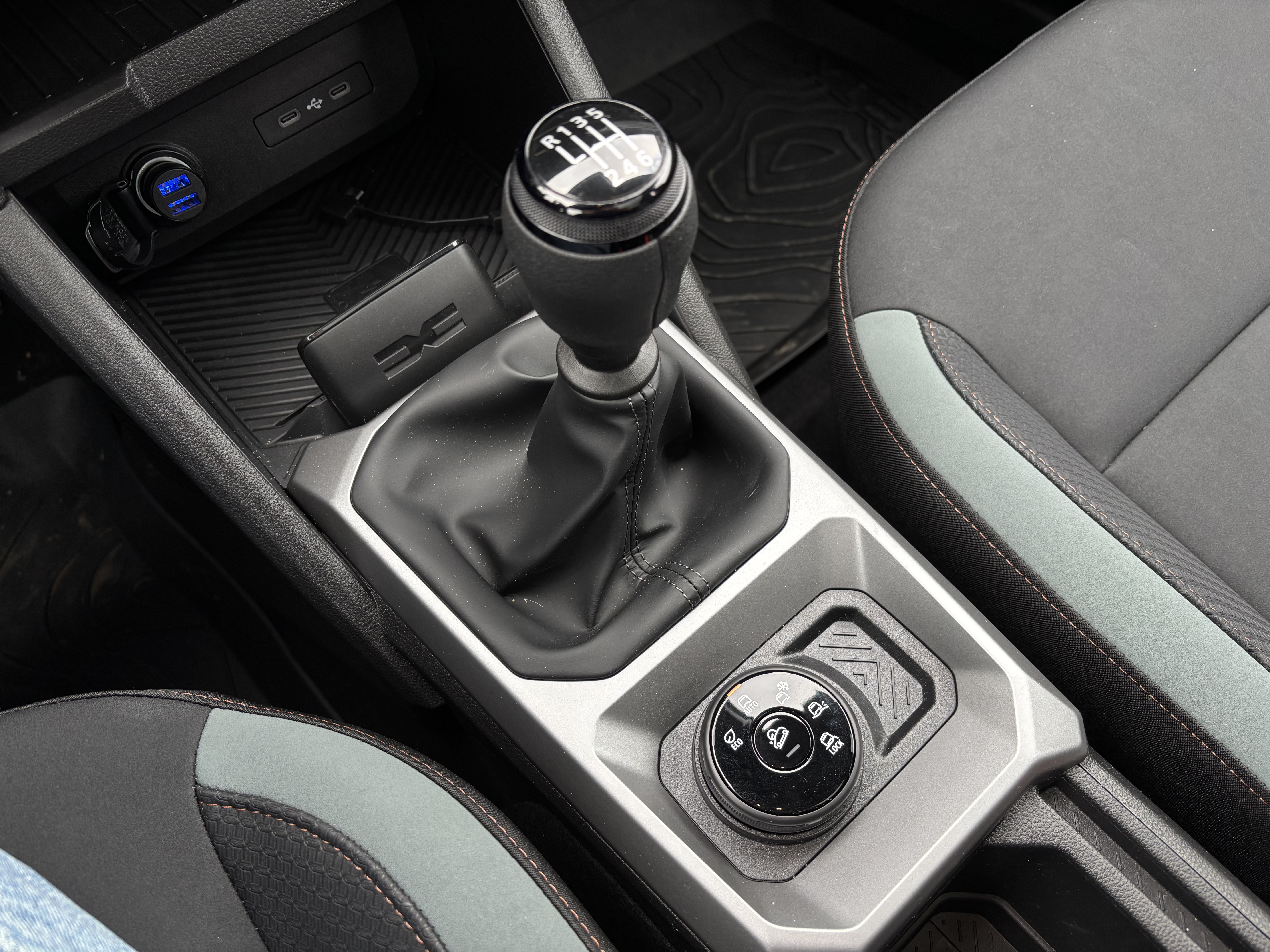
Beyond this aspect, Bigster comes in Romania with hybrid powertrains only, a first for the Dacia brand and a step forward towards more sustainable mobility. Even on the Essential trim, which costs 23.000 euros, you will find a 1.2 liter 3 cylinder engine with a turbocharger and a mild hybrid engine that output 140 horsepower. The version we had for testing is also 1.2 liter 3 cylinder with mild hybrid, but being the Extreme trim, it had the 4X4 traction system and 130 horsepower under the hood. It's worth mentioning that the Bigster also comes with a 1.8 liter 4 cylinder engine option, which features a full hybrid powertrain, very similar to the one found on the Duster 3, which we tested as well and about which you can find more here.
Even with the 1.2 liter engine option, the Bigster doesn't feel slow, on the contrary. Even on steep inclines, such as those found on mountain roads, the car surprises you very pleasantly when you go beyond 2.500 RPM and offers more power than you might expect. The gearbox, a 6-speed manual, is well set-up, the ratios are not too short, but not too long, either, so you'll get used to it very quickly.
The gearbox has a nice feel to it and the car will let you know when it's the right time to shift to a superior gear to have a better fuel economy. Still, on the long term, the engine might not like this approach, as it implies shifting when under 2.000 RPM and the car will feel a bit sluggish at that point.
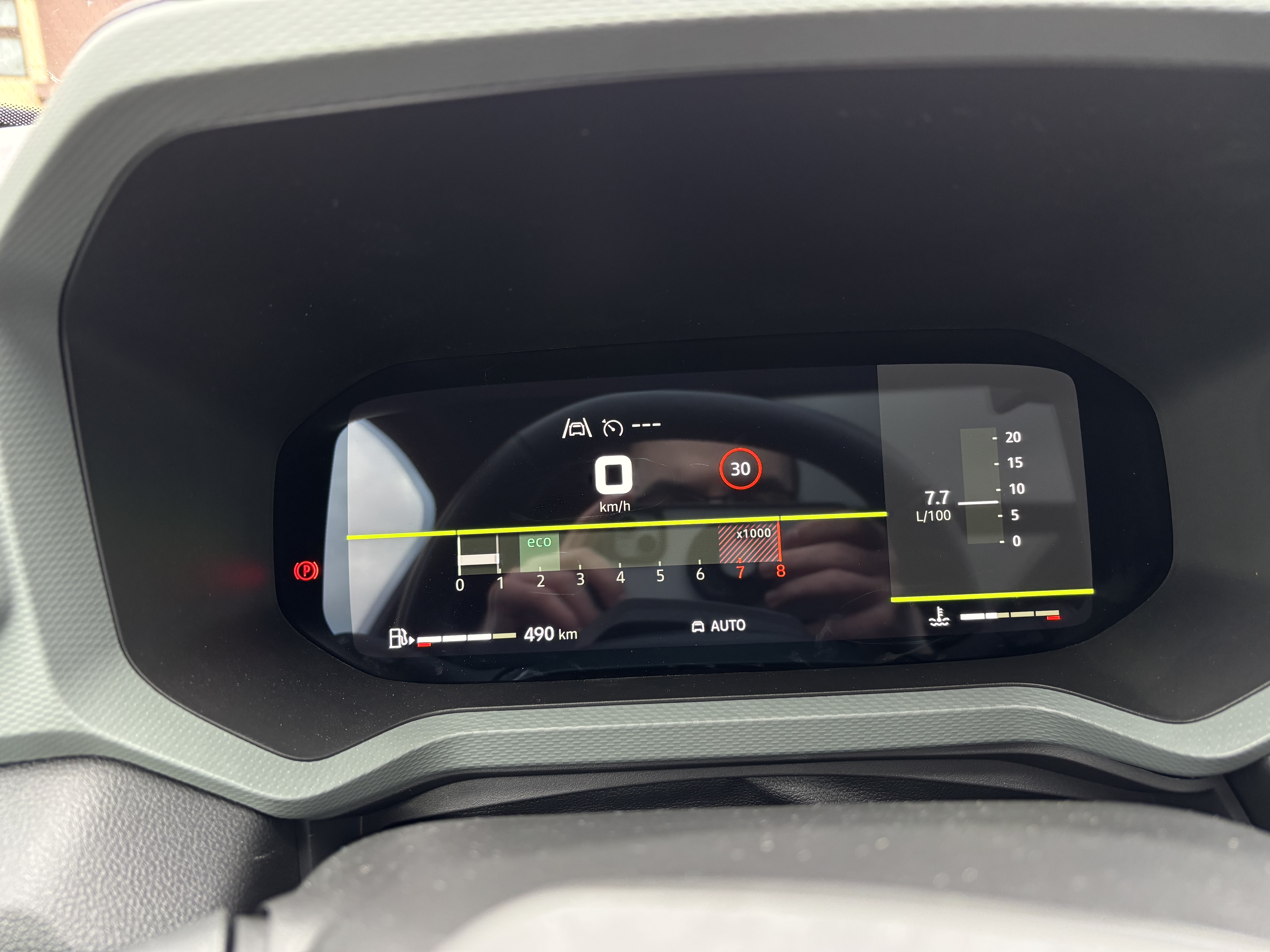
I recommend shifting when reaching at least 3.000 RPM (after the engine warms up for a few minutes), so that the turbocharger will be working, as well, giving you some extra power.
The electric motor is permanently active and will drive the wheels when going from a standstill, as well as when accelerating quickly, so it contributes to the nippy feeling of the car.
Certainly, the full hybrid version is the one you'll want for optimal power and comfort, because it features the multi-mode automatic gearbox from Renault and it will also give you the best performance, a more balanced driving experience, as well as a lower consumption.
With the mild hybrid 4X4 130 HP Bigster we achieved a fuel economy of 7.1 liters per 100 kilometers, not bad at all for a car that reaches over 1.5 tons with two people and some luggage in the back, but the full hybrid can definitely do even better and achieve just over 6 liters on a longer trip.
At lower speeds you'll notice that the steering is slightly stiffer than on the Duster 3, but that doesn't make the car difficult to drive, but rather easier to control and at least as easy to maneuver when you have to park it, for example.
At higher speeds, the steering becomes even stiffer progressively, like on the other Dacia-Renault models, but it remains precise and offers you good control at any speed.
What is again very impressive is how stable this model actually feels around corners, despite the high ground clearance and the comfort-oriented suspension. The Bigster almost has no roll at moderate speeds and you have to take a corner with a pretty high speed to destabilize it.
Bigster is a fairly large car, at over 4.5 meter in length, so it's not the easiest to drive around the city if we talk about maneuvers in small spaces or parking the car, but the good news is that if you need it for a long trip with the family, it won't let you down.
The most comfortable Dacia model to date
Bigster is not just sustainable, it's also a very comfortable ride on longer trips and off the road. I drove the car in the city, on the highway, national roads and even a mountain road that was in pretty rough shape.
Still, Dacia's compact SUV had no trouble with the pot holes or the indentations and here you can see the advantages of the larger size. The Bigster is comfortable even in the 3 cylinder version and it sits very well on the highway, so it's clearly the wisest choice for those who want a family-oriented model from Dacia, even if not with this choice of engine. It's clearly more comfortable than the Duster 3, even though it isn't bad itself as far as comfort is concerned and clearly better than the Jogger, which has the sole advantage of being able to fit an additional two passengers in the back.
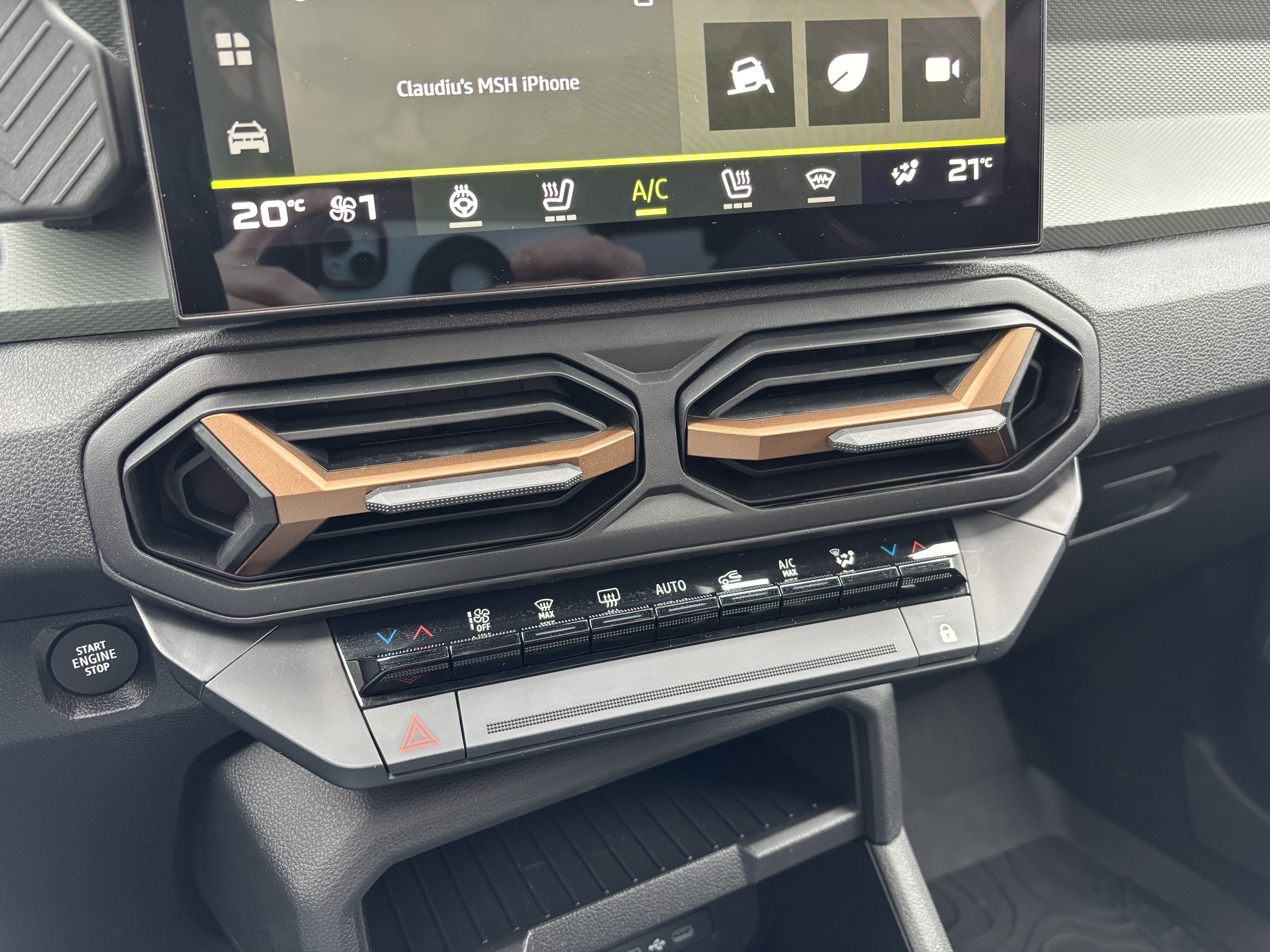
What makes the ride even more comfortable? The climate system, which now features two zones for those in the front, as well as a passage for ventilation in the rear, another first for Dacia cars.

Additionally, the front seats are electric and features heating, just like the steering wheel. Generally speaking, the seats and the rear bench are comfortable enough for a longer trip, as well, without being extraordinary, just adequate. Surely the perception of comfort will also depend on how tall each driver or passenger is and I belong to the sub-medium category.
The company also says that the soundproofing is better than on the Duster 3, but I am not convinced it is the case, I feel like it's very similar, which is good, because I liked it on the smaller model, but I can't say that the Bigster is above this. Dacia engineers added textile materials on the wheels' passageways instead of the plastic found on the Duster 3 to improve the soundproofing. But I don't think this is a good idea for the long term, because the material is more difficult to clean, especially after an off-road session with the Bigster, which you can to, thanks to the vehicle's 22 centimeter ground clearance.
You'll sit comfortably in the front, even better in the rear honestly, I am actually impressed by how much space Dacia was able to squeeze inside the Bigster, considering the car isn't that huge on the outside. And the boot is also huge, at 667 liters and which can be extended up to over 1.800 liters, but the capacity varies a bit depending on the engine choice. Anyway, the space will surely not be an issue if you decide to buy this car.
The mid rear seat can individually fold towards the front to reveal a large armrest for two passengers. Also, about this seat, if you turn it into an armrest, you'll be left with a big hole between the rear seats and the boot, where objects can slide in or out. So ,it wouldn't be a bad idea to see a wall (even a thin one) separating the two spaces in case passengers will want to use the mid seat as an armrest.
This for sure was a way to cut back cost and maybe on the future versions, Dacia will add some material there to make thing a bit more put together. Anyways, the armrest itself features two cup holders and two phone support indentations, which are oriented towards passenger on the left and right side.
Panoramic sunroof, a first for Dacia
Dacia added another first on the Bigster, which is the panoramic sunroof, probably and option which the fans of the brand were waiting for a long time and which is very well executed here, if you ask me.
The sunroof extends from the front all the way to the back and is only interrupted in the middle, while the textile part that covers it on the inside can be pulled back towards the back half-way or completely.
But this is not all, since the Bigster has a sunroof, as well. Yes, you heard that right. I didn't see the option for a sunroof on a new car in a while, but the Bigster offers it on all versions of the car that sport the panoramic sunroof and it allows you to basically open the front side of the roof to let fresh air in.
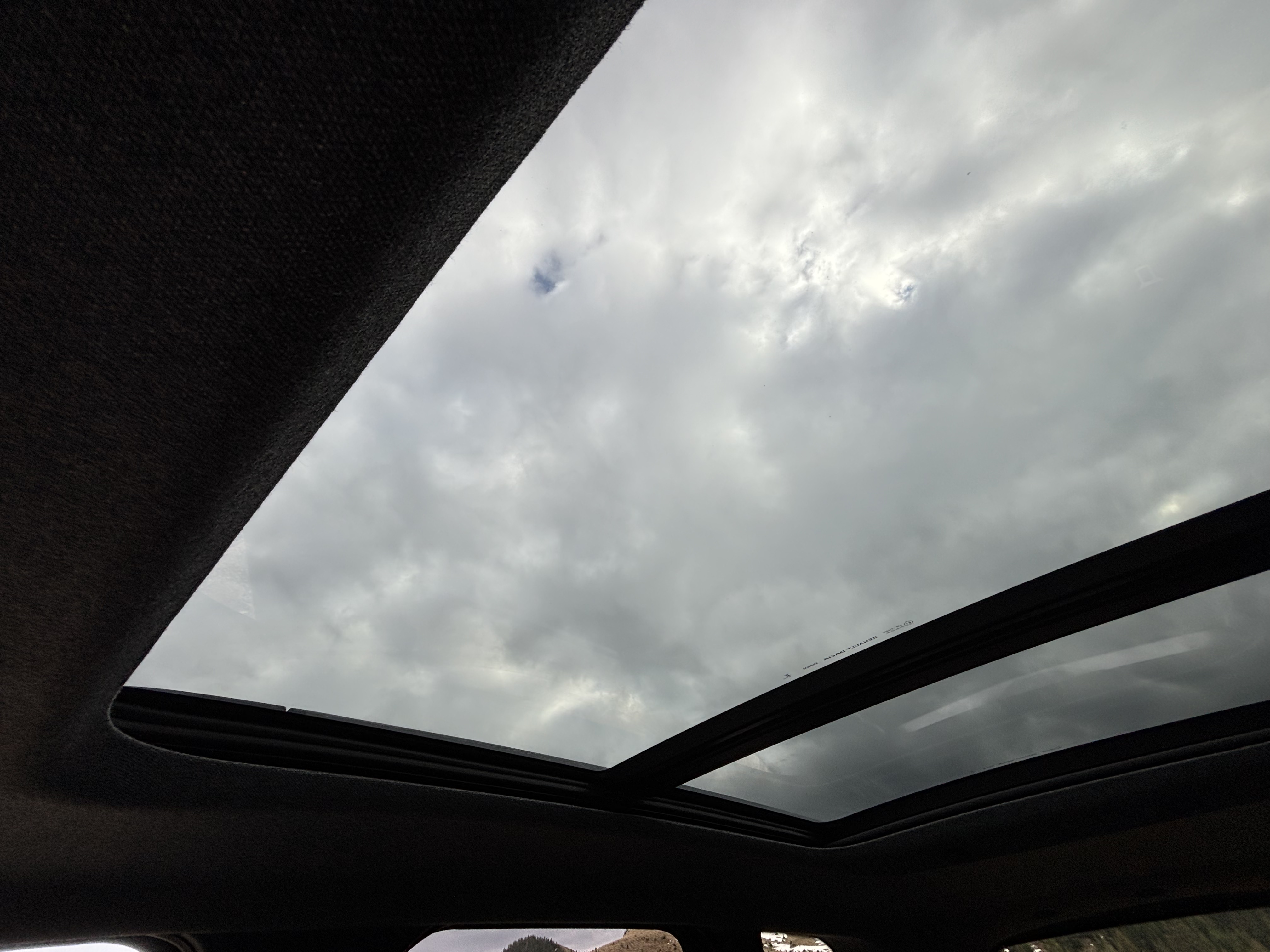
Both the textile part of the roof, as well as the sunroof itself, can be opened by actioning two buttons above the center console, but only when the engine is turned on.
According to company representatives, the Dacia Bigster has the best sound system ever installed on a Dacia car and it is tuned by Arkamys. The 6 speakers sound very good for a Dacia car and can satisfy the needs of drivers that previously owned a model from Mioveni, but it is not as good as other sound systems on the market.
For example, even what you might find from Renault, the Harman / Kardon systems, have better spatialization, the bass is deeper and the sound overall is cleaner and let's not mention other brands using even more sophisticated sound systems.
But, for what Bigster wants to be, "the most car" in Dacia's lineup, the Arkamys 6-way speaker system is clearly a step ahead and it managed to surprise me pleasantly.
Bigster has a familiar software for Dacia drivers
As far as the software goes, the Bigster sits at the same level with other Dacia models that we've tested so far, especially with the Spring and the Duster 3, the cockpit, buttons and center tablet are in roughly the same position and this is a good thing, as far as I am concerned.
The tablet is oriented towards the driver, the cockpit is easy to read and to follow at all times and these are the advantages of an apparently "basic" software solution. Basically, you have all the information regarding the speed, consumption, road signs, speed limits and so on.
The tablet's software is also easy to navigate, you have a few applications and a suite of basic settings, without feeling like you are missing something from a modern vehicle.
CarPlay works fine and is wireless, it connects quickly and without many issues, there is a wireless charger in the front on the center console and two type-C ports, but also a car lighter that can be turned into an additional charger with the right adapter.
Otherwise, the car recognizes road signs very well, the autopilot works very well, I'll write more about the adaptive one in a future test drive with the full hybrid Bigster and the parking sensors do a good job themselves, too.
The rear-view camera continues to disappoint when it comes to its quality, something common on Dacia-Renault models, but maybe here the issue was emphasized by the dirt from the short off roading session we took. It's enough to see what's behind the car, but the quality won't blow you away for sure.
Bigster will receive further software updates for the apps and the map system over the next years, so you can be sure that the model will remain relevant in the future, as well.
Conclusions Dacia Bigster Mild Hybrid
Dacia Bigster has a starting price of 23.000 euros flat and as I wrote in the beginning, there are only hybrid powertrains for this model. The basic model offers you the essentials, so you won't find things like the air conditioning with the passageway for the rear passengers, nor the panoramic sunroof and the drive is only 4X2.
If you want everything the Bigster has to offer, you'll be looking at the Extreme trim, which comes with the panoramic sunroof, automatic headlights and the hill descent assist feature, you'll be paying at least 26.000 euros, also for the 1.2 liter mild hybrid engine with 4X2 traction.
The mild hybrid 4X4 model that we tested costs 28.500 euros in the Extreme trim and the full hybrid version with the same trim level is 29.500, but you'll lose on the 4X4 drive.
Still, Bigster faces stiff competition in this segment, where you'll find iconic models, such as the Volkswagen Tiguan, Toyota RAV4 or Renault Austral.
The Tiguan starts at a little over 34.000 euros, also with a mild hybrid engine, but you'll have to invest extra in additional features. The same goes for the RAV4, which starts at almost 42.000 euros, but it's true that it comes with a full hybrid engine version and a more potent 2.5 liter Dynamic Force engine.
Renault Austral currently goes through a facelift phase, so now you'll only find a couple of versions of the car on Renault's page, starting at 33.000 euros with mild hybrid and full hybrid engine configurations.
Still, these are clearly superior vehicles compared to the Bigster when it comes to the design, the build quality and the materials, maybe even the engine options.
Bigter's biggest advantage is that it is definitely the more affordable version of them all even with all the bells and whistles added and it is a car that will appreciate off-road sessions more than the aforementioned rivals. Also, it can also be more spacious than some of them, at least, such as the Toyota RAV4, which we tested this year in the form of the Suzuki Across.
For those looking for a new compact SUV, Bigster is an interesting option and with a very aggressive price, which offers a bit of everything. There's more than plenty space, comfort, more than a couple engine options for those who want to conquer expeditions, as well as for those who want to drive in a relaxed manner on long distances and get great fuel economy.
Bigster is the most advanced Dacia model to date and it has everything you might want from a modern car that you won't pay a fortune for, at least when compared to the rest of the market.



Any thoughts?