 Mihai - Cristian Ioniță
Eco-Business writes that the main reasons behind these fluctuations are extreme weather events, which directly affect crops and thus, the price of the final product, while geopolitical conflict amplifies the issue. To make matters worse, the ever-increasing population also contributes to the unaffordability of food these days.
It depends on the type of foods that we look at, as well, since for example, grains and cereals have become more affordable recently than they were at the start of the year, while for things like olive oil or orange juice, their value started going up.
Prof Elizabeth Robinson, director of the Grantham Research Institute on Climate Change and the Environment, says that this is also a consequence of the world's current integrated food systems and experts at Carbon Brief created a number of charts that show how climate change impact our ability to feed ourselves.
Europe's food prices hiked in 2022 due to extreme heat-induced inflation, driving up food prices by 0.43-0.93% per unit, which adds up when purchasing certain food multiple times per week or month.
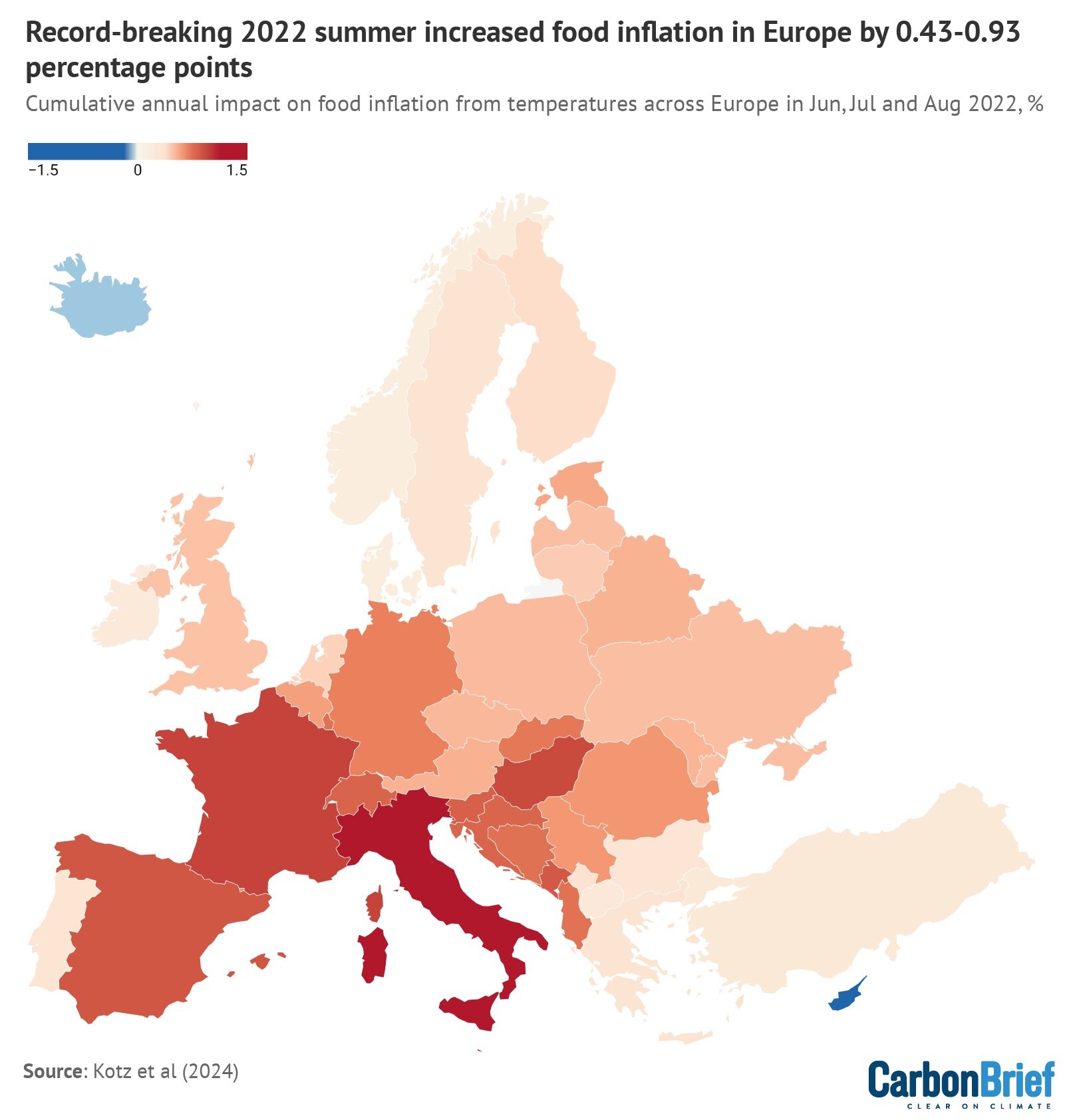
Sursă foto: Carbon brief
The highest impact, according to the data recorded by scientists, was felt in countries like Italy, Spain and France, while oddly, for Iceland and Cyprus, 2022 brought some relief when it comes to food prices.
This study published in 2024 reveals that extremely high temperatures affect food prices worldwide, both for low and high-income nations. The scientists analyzed data from 27.000 monthly observations of food prices from 121 countries between 1996 and 2021 and found that the higher temperatures recorded in the summer months, which are the hottest in a year, drove the highest inflation rates.
Since this trend already took place in Europe back in 2022, it's not impossible that a similar situation is at bay for 2024, as well, given that this was the hottest summer of the continent in recorded history.
While inflation for food in Europe usually sits below 5%, these values can definitely fluctuate a lot and at certain times in 2022 and 2023, they reached 19% increases.
Energy-related inflation also rose dramatically in 2022, given the climate change context, as well as the geopolitical tensions in Eastern Europe and the post-Covid demand increases. In the study, scientists also explained how extreme heat could drive up food prices in Europe by 30-50% by 2035.
Dr Maximilian Kotz, a lead author on the study was alarmed by the "extent to which these impacts could be amplified already over the next 20 years by further climate change", pointing to global warming as being one of the main factors for food price hikes.
Common crops severely affected by global warming
Climate change contributes to lower yields in more than one way. Thus, in the US, orange production fell by over 40% between 2020 and 2024, due to extreme weather such as Hurricane Ian, but especially because of climate change-related disease that hit the crops.
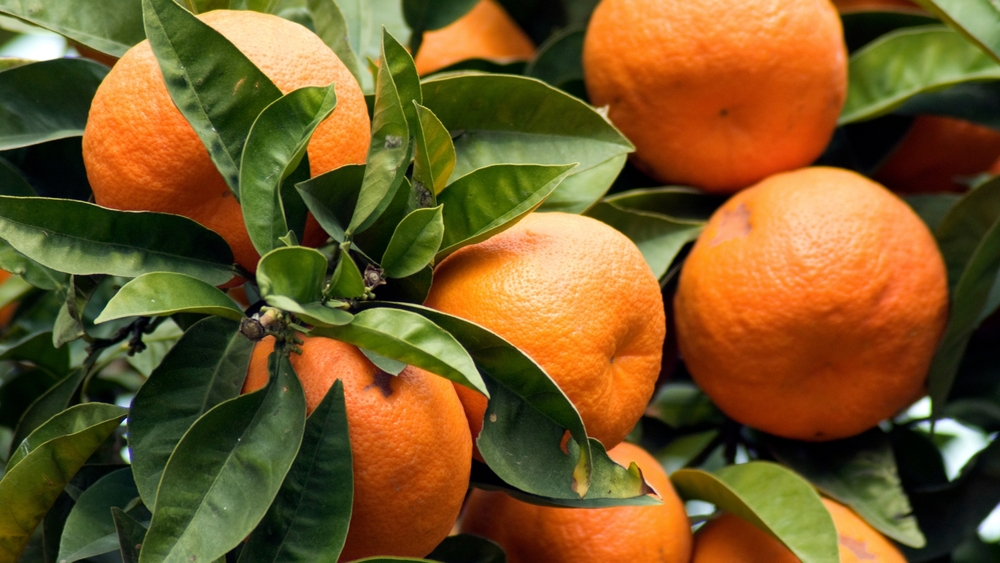
Brazil, one of the world's top orange producers, expects the worst yield in 36 years in 2024, because of floodings and drought. This essentially doubled the prices for orange juice, according to experts at US' Department of Agriculture (USDA), from 1.83 GBP per 473 ml in 2020 to 3.30 GBP for the same amount this year.
The world's olive oil industry also suffered significantly, as the production lowered by around one-third between 2021 and 2024, mostly due to extreme temperatures and the drought and wildfire these brought. Thus, in Portugal, the price for olive oil increased recently by as much as 70% compared to January 2023, while for the rest of the EU, prices were around 50% higher than usual.
Financial Times wrote that "droughts and heatwaves, exacerbated by climate change, have knocked olive oil output in Spain, the world’s largest producer, as well as other major producing countries such as Italy and Greece."
Usually, Spain produces over 40% of the world's reserve of olive oil, with other Mediterranean countries, like Greece and Italy, also having an important share of the industry. However bad it is, the situation has improved compared to the previous yield, as Spain's capacity for 2023-2024 is around 850.000 tons, 28% higher than that recorded between 2022-2023.
What about cereals? Well, it isn't better there, either. China is the world's most important rice and wheat producer and it saw constant decreases in the productiveness of its yields over the past years. Between 1999 and 2012, the country's rice crops were around 8% less productive due to heavy rainfall, while drought and cold weather also took their toll on rice farms.
Government data also reveals that between 2018 and 2023, rice production decreased again, by only 3%, but a decrease nonetheless. At the same time, corn and wheat crops were more productive during these years, by 4 and 12%, respectively, so there is a glimmer of hope there, at least.
Other types of farms in China, including cabbage and spinach, suffered from climate change-related events, such as floods and droughts, which "devastated millions of acres of farmland and is now hitting consumers in their pockets", as Reuters wrote recently.
If climate change-related events and geopolitical tensions will continue to worsen, the resilience of our food system, already fragile due to the rising population, will drop further and further, leaving us exposed to potential food crisis in the future.



Any thoughts?