 Mihai - Cristian Ioniță
Conservation Carpathia's mission is a difficult one, since it implies protecting the fauna and flora in a large area of the Făgăraș Mountains, as well as supporting the communities in the mountains. To find out more about the actions done so far by the organization, its future objectives and how we can all contribute to a cleaner environment, we talked to multiple experts at Conservation Carpathia.
Small steps towards a grand objective
Conservation Carpathia Foundation started in this journey over 15 years ago, back in December 2009, with a daring, yet very important goal: creating the Făgăraș Mountains National Park, the largest national park covered by forests in all of Central Europe.
"So far, we've managed to bring together a team of 160 people that are passionate about nature, very good professionals, each contributing to the goals of the foundation. Each step we took was guided by our commitment to help nature, as well as local communities, proving that nature and human prosperity can coexist in a sustainable way", Victoria Donos, communication and communities director at the Foundation Conservation Carpathia told Green Start-Up.
You can support Conservation Carpathia's mission by donating to the organization at this link.
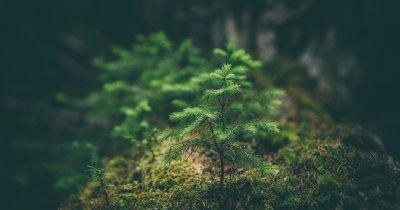
Over the years, the organization implemented multiple projects that helped protect the environment, but there were some that had a really big impact and continue to be developed. For example, Conservation Carpathia saved over 28.000 hectares of forests and alpine grasslands from being exploited, meaning around 280 million square kilometers and in the places which was erased in the past, the organization planted over 4.5 million trees.
Victoria added that "before planting the trees, we destroyed the roads that were used to transport the cut forests in the past. We raise a large portion of the trees that will be moved to the forests in one of our 9 tree nurseries."
Also, since the fauna is a critical component in the ecosystems that the team protects, Conservation Carpathia introduced over time some species of animals that have been missing from the landscape for the past hundreds of years, specifically, the bison and the beaver. Thus, over 80 bison and 62 beavers have been reintroduced in the place they used to call "home".
Preventing the conflict between animals and humans, a continuous project
Besides reintroducing extinct species, it's very important that we monitor these, to ensure the balance of the ecosystems and a positive dynamic. Thus, experts at the organization permanently monitor the bear, wolf and lynx populations to offer them the best possible life.
"On a surface of over 100.000 hectares, we created the first modern monitoring system for the wildlife in Romania, overlooking several species, using DNA testing and security cameras. We monitor the bear, wolf, lynx and deer populations from a genetic standpoint", said the communication and communities director.
Additionally, to prevent the conflicts between humans and nature, as well as hunting and poaching, Conservation Carpathia created a space with a surface of 78.000 hectares which acts like a quiet zone for the wildlife. At the same time, the team created a prevention and intervention system to limit the damage caused by the fauna and to compensate affected farmers that live in the areas of the mountains.
Still, some tourists might come in to contact with wild animals, such as bears, and in this case, according to Mihai Zotta, conservation director at the Conservation Carpathia Foundation, the discussion is ample, but it can ultimately be concluded to limiting the contact. How can we do that? Well, avoiding the introduction of foreign food sources in the habitat of bears is a good start, which include farming products, household waste or foods that come from voluntary feeding.
"At the same time, we have to protect the habitat of bears by keeping some natural forests protected, without disturbing them with vehicles, and to keep the old forests safe, as they provide the animals with food, such as forestry fruits and seeds. It's also important to preserve the bear's prey, including the boar and deer", he added.
Some pieces of advice to stay safe while in the wild:
- avoid keeping food in tents;
- don't feed the bears or other wild animals;
- don't get close to take pictures of bears;
- avoid cubs, as they are more often than not accompanied by their mother, which will do everything in her power to protect them;
"It's crucial to stay on the marked trails, to walk on foot and avoid motorized vehicles, while watching out for noise, giving animals plenty of time to retreat or to keep distance ourselves, if we notice them first", added Mihai Zotta.
As far as the communities in the Făgăraș Mountains are concerned, they don't have much of a choice and have to live with the wildlife in the area, so the Carpathia team advises them on creating "green" businesses, supports the development of Local Food Points and offers them financial support through the Carpathia Fund, initiatives undertaken through the social organization Roadele Munților Făgăraș.
Accelerated deforestation and uneducated tourists, the main enemies of forests
Mihai also told us that the ecosystems in the Făgăraș Mountains are dealing with two main problems, the first being the accelerated deforestation of old forests, which are essential for the biodiversity, the stability of the water sources, as well as fighting climate change.
"In the past 5 years alone, starting 2019, 247.000 trees were cut in forests that were over 130 years old. Although the guidelines of the European Commission recommend that we should protect these forests and the European Strategy for Biodiversity oversees and increase of the protected areas, in Romania this process is slowed down and it is allowed to continue the destruction of these natural treasures, which are important to all of us, only for financial benefits", the conservation director explained for Green Start-Up.
According to him, tourists respect the nature for the most part, collecting the waste they may generate, but "there are also quite a few that get here by car, have a picnic and then forget about the waste. One worrying phenomenon is the increasing number of ATVs and off-road motorcycles, which cause severe damage to the environments."
The stability of the wildlife and the flora in the Făgăraș Mountains, between balance and invasive species
With some notable exceptions, the ecosystems in the Făgăraș Mountains are fairly stable, proff that the efforts done by the Conservation Carpathia Foundation are working, but there are a few species that are endangered here and which could cause some imbalance. Here we mention the foreign invasive species or exotic non-native plant species.
The team of the foundation talked about these species and the danger they represent first back in the summer of 2024 and according to dr. Ovidiu Pop, member in the team of Conservation Carpathia, there are currently over 130 of such potentially invasive species.
"Many of those are plants that have been cultivated in gardens and which have eventually reached nature in an uncontrolled way and thus, they spread. Also, the seeds from these plants have been brought in the country often at the same time with other plants", he added.
Since they don't have natural pests here and they possess a great spreading capacity, these plants can become dominant in grasslands, alongside rivers or on abandoned farming lands and in time, they can replace native plants, which are essential to the stability of the ecosystems, as well as for using them as feedstock or for medical purposes.
Also, these plants don't affect just the local flora, but also the wildlife, which feeds on native plants.
Removing these plants, especially those that live more than two years, is very difficult, as they already occupy a large area.
"The most efficient way to remove them is to prevent their spreading through education actions, such as those conducted by the Carpathia Foundation last year and by avoiding the disposal of vegetable waste in nature, because they might contain seeds or roots of foreign plants."
As far as the wildlife is concerned, Mihai Zotta explains that "species found at the top of the food chain are the most vulnerable when these food chains are disturbed."
One such example is the mountain eagle, a symbol of the area, which has very low numbers, however. On the other side of the spectrum sit the bear, the wolf and the lynx, species that are protected Europe-wide, meaning that their numbers in Romania are still stable and in the case of the bear, there might be even more individuals than the ecosystem can support as the result of artificial feeding.
How technology helps us protect nature
Back in 2024, Conservation Carpathia Foundation implemented a drone monitoring system for the plantations, monocultures and wind-affected areas and now, the team has an overview on the efficiency of these systems, but also how they merged with the wildlife.
Mihai Zotta says that "using semiautomatic drones for monitoring proved to be an extremely efficient system, saving us time and reducing on the subjectivity of manual observations. Prey birds got close to the drones, in some cases around 5-6 meters, but they left them alone after realizing they weren't a threat."
The next step in this direction, he says, is the implementation of a completely automated system for the collection and interpretation of the images.
He also believes that improving the laws is important and necessary, but just as important is that authorities will start to act as "protectors of nature". Also, we should all bring our contribution to protect nature and forests, since these offer us ecosystem benefits, such as water, carbon capture and lowering temperatures.
The future plans of Carpathia Foundation for durable ecosystems
According to Victoria, the main goal for 2025 for the organization will remain the creation of the Făgăraș Mountains National Park. At the same time, the team will continue to develop the ecotouristic infrastructure for the park, which will ensure the environmental protection and the development of the local economy through sustainable tourism. There are already touristic centers and hiking trails that allow for the responsible exploration of nature.
Besides these initiatives, the team wants to continue the education process about the importance of biodiversity conservation and to attract tourists worldwide, while also to organize impact events, such as Făgăraș Fest or Carpathia Bike Tour.
"All of these initiatives are aligned to our end goal of having a sustainable ecotouristic infrastructure that can support the protection of nature, as well as the economic development of the region. These projects will bring long-term benefits to all those involved and will put the future Făgăraș Mountains National Park on the world's touristic map as a top ecotouristic destination", Victoria Donos added.
Photos source: Călin Șerban (Conservation Carpathia Foundation)




Any thoughts?