 Oana Coșman
Tom Meijeraan has twenty years of expertise in product development and digital innovation, giving him a wide understanding in the area. He has a CEMS Master in International Management and an MBA from the Rotterdam School of Management.
“During my whole professional life, I have been working on innovation: introducing new products and services, mainly in the tech domain. This goes all the way back to introducing internet services on mobile devices at a time we were already happy to play the game snake on our Nokia 3310s. More recently, I worked on the internet of things (IoT) domain, which is related to the energy transition, as the increased use of solar and wind energy leads to higher fluctuation in the energy production, which has to be balanced at the demand side. IoT solutions can help shape a ‘smart grid’ by flexibly switching on things like heat pumps and charging stations when energy production is high and switching them off when the energy supply is low”, Tom tells us.
It’s because of his work in IoT that Tom became more aware of the challenges we all have in order to live more sustainable. That is why he felt that he could do more than just helping large companies to introduce more new services.
“It was at that point that my current colleague and co-founder Fonger Ypma presented his idea to me about restoring the Arctic ice sheet. As the possible impact of stopping the current decline of the sea ice could be that huge, it took me less than an hour to decide that I wanted to fully dedicate my time on this”, says Tom Meijeraan.
With temperatures reaching new records this year, and with more and more climate problems surfacing and needing solving, Climate Change Summit 2024 is emphasizing the critical role that startups and innovation play in tackling climate change. Tom Meijeraan's creative ideas from Arctic Reflections will be among the event's highlights.
But what exactly does Arctic Reflections do and what is the enormous task Tom and his team plan to tackle?
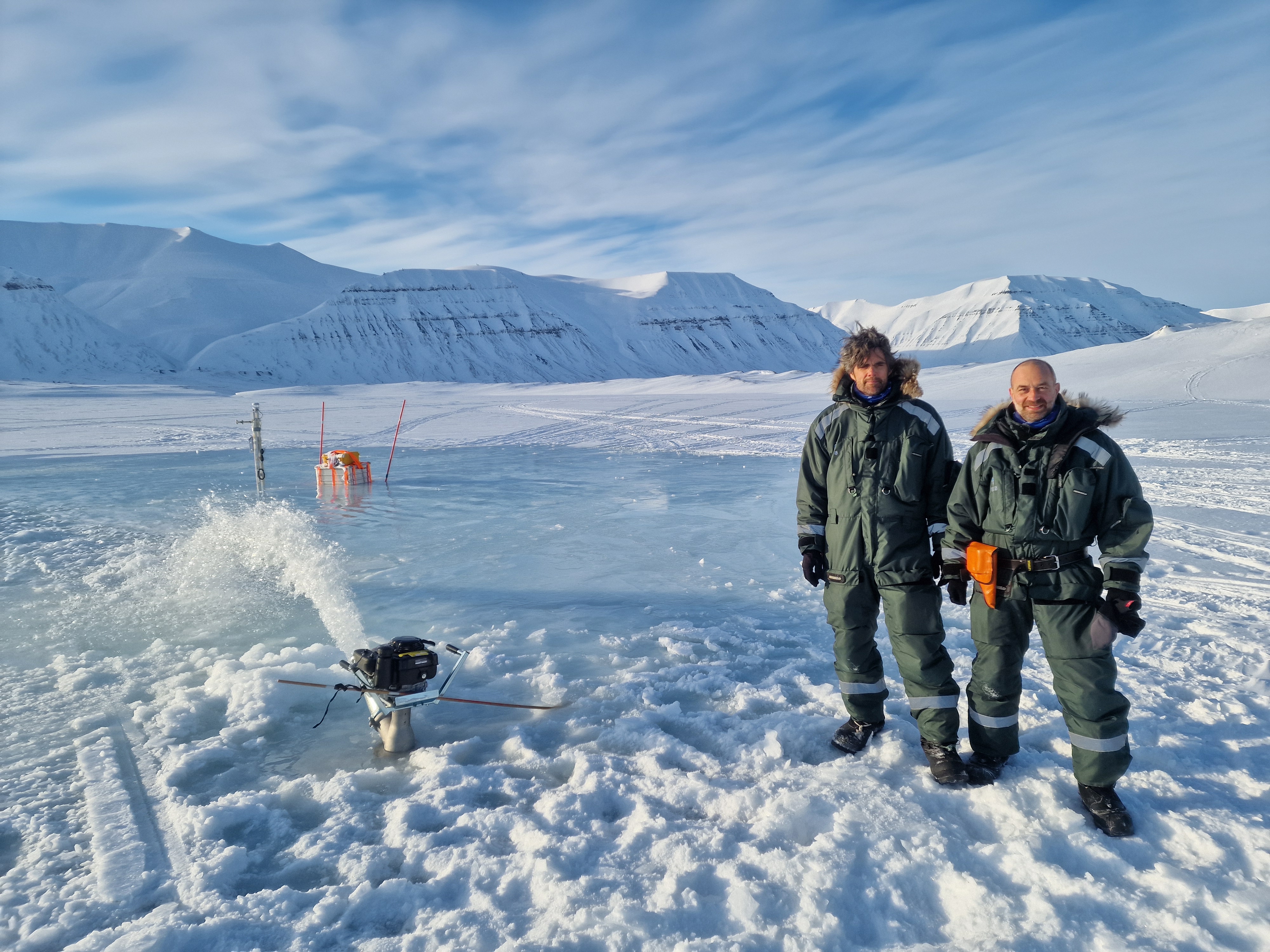
“We are on a mission to regenerate Arctic sea ice to restore its natural solar reflectivity and slow down further warming. The idea was derived from a technique the Dutch ‘ijsmeesters’ use to thicken the ice of ice-skating rinks on natural ice: applying small layers of water on the ice when temperatures are well below zero, so that the ice thickens quickly, allowing the skating rink to be used sooner. We learned that this technique is also used to create ice roads in Canada and Scandinavia, enabling heavy trucks to cross the ice and resupply remote villages. So, our technology of pumping water from below the ice on top of the ice to thicken it is mostly based on proven technology, Tom explains to us.
According to him, their purpose is different than that of creating ice roads or skating rinks. They research whether this technique can be used to restore the Arctic sea ice.
“The Arctic sea ice functions as the “world’s refrigerator”, by reflecting most of the incoming solar energy back into space through its white surface. By thickening the ice, we think we can extend the lifetime of the ice and also enhance its ‘albedo’, which is the level of reflectiveness”, continues Tom.
And why is the Arctic ice so important and why should we be very much aware of the dangers of the melting ice caps?
According to Tom, melting Arctic sea ice will lead to extra warming, because the naturally white sea ice surface reflects up to 90% of incoming solar energy.
“When the ice is not there anymore, the dark ocean will absorb more than 90% of this energy instead. This will lead to warmer water, even less ice, even more warming. As the Arctic continues to warm, dangerous events like the weakening of the Polar Vortex can set in motion, which can lead to more extreme weather events, more glacier melt leading to sea level rise, slowing down of important ocean currents and the release of methane, a very potent greenhouse gas”, Tom explains to us.
Find out more about Tom’s mission as an entrepreneur in sustainability, the challenges of the task that the team behind Arctic Reflections face and a few ideas on how we can preserve and regenerate our planet in our exclusive interview with Tom Meijeraan, the cofounder of Arctic Reflections.
You can meet him in Bucharest at the Climate Change Summit, between October 15th and 17th.
An overlooked problem, but a really dangerous one
How have you identified the problem in the market that you are trying to fix with your startup? What is your goal in restoring the Arctic sea ice and where are you now in this journey?
The decline of the Arctic sea ice seems to be an overlooked problem. Besides the extra warming because of less reflected solar energy, its decline can trigger dangerous feedback loops like the release of methane out of thawing permafrost. Even in the most optimistic IPCC scenarios, the first virtually ice-free summer in the Arctic is predicted to happen in the 30s or 40s this century. So, there is not really a lot of time to waste to do something about it. I think the problem is a bit overlooked because the Arctic seems remote and far away, but the impact of the decline of the sea ice will affect us all, not just people in Arctic countries.
Which were the biggest challenges for you when building Arctic Reflections? What solutions did you find?
Building trust is one of the most important things we have had and have to do. People should be able to trust that everything we do is rooted in science and that if we notice that some of our assumptions or hypotheses are wrong, that we will communicate this and course correct if necessary. That is why we established partnerships with academic institutions and most of our teams have a scientific background. Furthermore, have the policy to make all our research and underlying data public. It is also a great recognition for us that we are endorsed by the United Nations Ocean Decade programme.
What are your biggest challenges now? How do you finance Arctic Reflections?
The technical challenges in front of us are the design of an effective solution to move our pumps over the ice and selecting the right kind of pump, which means a pump with a high flow rate, low pressure and very energy efficient. Researching the best clean energy source for future projects is another challenge. On the governance side, we need to further build good relationships and trust with the people living in the Arctic region and get more awareness of our initiative with governments, intra- and intergovernmental organizations and NGOs.
At the beginning we self-funded Arctic Reflections, but by the end of 2023 we got funding via CarbonFix, an organization which provides loans to initiatives such as ours who fight climate change and could have a great impact. Also UNIIQ, a Dutch early stage fund provided us with funding. For our next phase we aim for a mix of philanthropic money, government grants and impact funds.
Global warming - how can we counter it?
What do you feel is your mission as an entrepreneur in sustainability? What keeps you going?
That’s easy: the problem at hand, the decline of the Arctic sea ice, is very real and needs to be stopped. That is enough to keep me going. Though the topic is very different from the tech products I worked on before, the process is quite the same: start by taking the first step, expect and counter a lot of issues, keep course but don’t be afraid to course correct when necessary and persevere.
We’ve just gone through the hottest summer so far and the ice cap is melting at a rapid pace. What can we do in order to preserve the ice cap? How can we preserve and regenerate our planet? Can we still regenerate it, or is it too late?
Most important is to reduce our greenhouse gas emissions. That should remain the focus. But unfortunately reducing emissions will not be enough to save the Arctic ice sheet. We need to do more. Removing CO2 by land-based initiatives like reforestation are also very important.
In addition to that, we think initiatives like ours, providing a direct cooling impact by maintaining the Arctic ice sheet, should also be seriously considered as part of the mix to counter global warming.
None of them should replace the other nor should we provide any distraction to the most important goal of quickly bringing down our emissions. We are optimistic that it can be done. I think we should keep hope as losing hope easily leads to giving up on fighting climate change and that’s the worst thing we could do at this moment.
What are the next steps for you in developing Arctic Reflections in the next 12 months?
Coming winter, we will perform another field test, where we want to further validate our hypotheses and gain more insights on which technology we could use best to scale up operations in future. We will further research the impact of ice thickening on the Arctic ecosystem and last but certainly not least, we want to learn from and cooperate with the local indigenous people of the Arctic region and incorporate their knowledge into our research.
You will be in Bucharest this fall for the Climate Change Summit. Where are you going to talk about and please give us an example of an action that each of us can make in order to be more sustainable and ensure a durable future for ourselves and the next generations.
I will elaborate on the questions you asked during this interview: why the decline of the sea ice concerns us all, how we think we can stop this decline, what we did so far already and what we’ll do in the near future.
A tip for everyone to be more sustainable? I think everyone can best decide for themselves what they could do and are willing to do, or willing to give up. Anything counts. But if I should give a concrete tip: focus on reducing energy, e.g. by improving the isolation of your home. Non-used energy is the cheapest and cleanest energy around.




Any thoughts?