 Mihai - Cristian Ioniță
Renault Symbioz hides its practicality behind a very modern design
Since you lay your eyes on the Symbioz for the first time you know you're dealing with a spacious car, because it's over 4.4 meters in length, but even so, this model manages to surprise further. I recently tested the Suzuki Across (essentially a Toyota RAV4), which despite being larger than the Symbioz as far as outside dimensions go, it didn't manage to impress me with regards to the interior space or the boot capacity.
With the Symbioz, Renault managed to combine a car that's beautifully designed, as it resembles a Mercedes SUV from the back, with a surprisingly spacious interior and boot that's decent at first, but can quickly turn out to be pretty large with a trick that I haven't seen before.
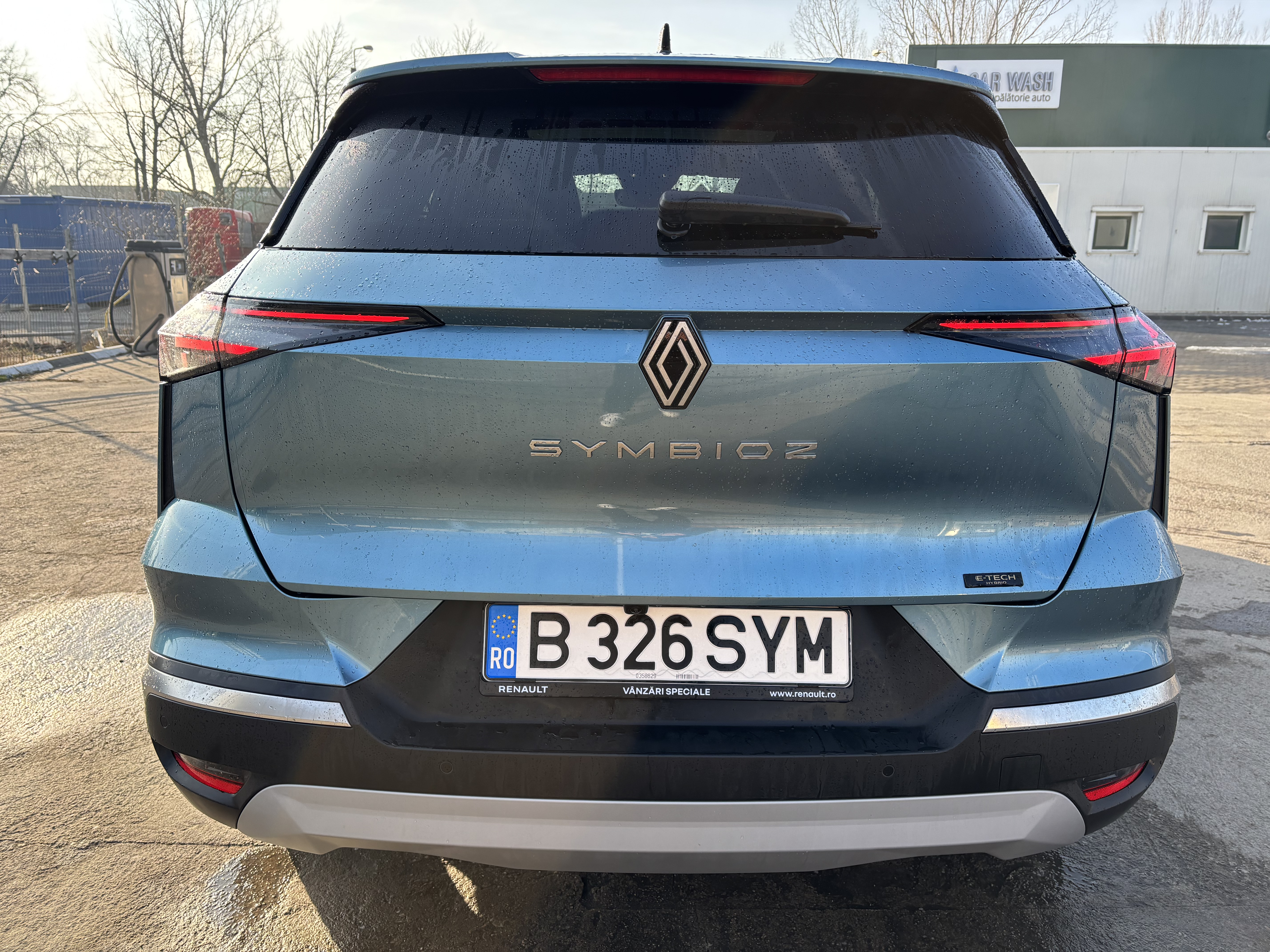
At every test drive so far, I've had a passenger to my right side that's very picky about how spacious and comfy a car really is, being my dad. He isn't a tall or chubby person, but is definitely larger than me. If the Across could have done better in terms of interior space and the boot, as far as he's concerned and even getting in the car seemed a little difficult, no such thing was the case for the Symbioz.
He got in the car pretty much effortlessly both in the front seat, but also in the back one and he had plenty of space for its knees, as well as headroom, thanks to the SolarBay roof, which Renault claims improves comfort in this regard.
The sliding backseat, a dream for the drivers that always carry something
Any modern car allows you to fold the back seats if you need to transport multiple things in the boot or something that can't fit in the standard space. But what if you could slide the backseat towards the front seats and this way, to gain quite a bit of extra space?
Well, that's in fact a very interesting feature of the Symbioz, the sliding backseat that can be adjusted up to 16 centimeters and extends the boot's capacity from a fairly average 434 liters to a quite nice 624. It's true that if you pull the backseat all the way to the front, the comfort of the passengers in the rear will take a backseat itself, pardon the pun, but if it's just the driver and a passenger on the right seat, then this is not a problem.
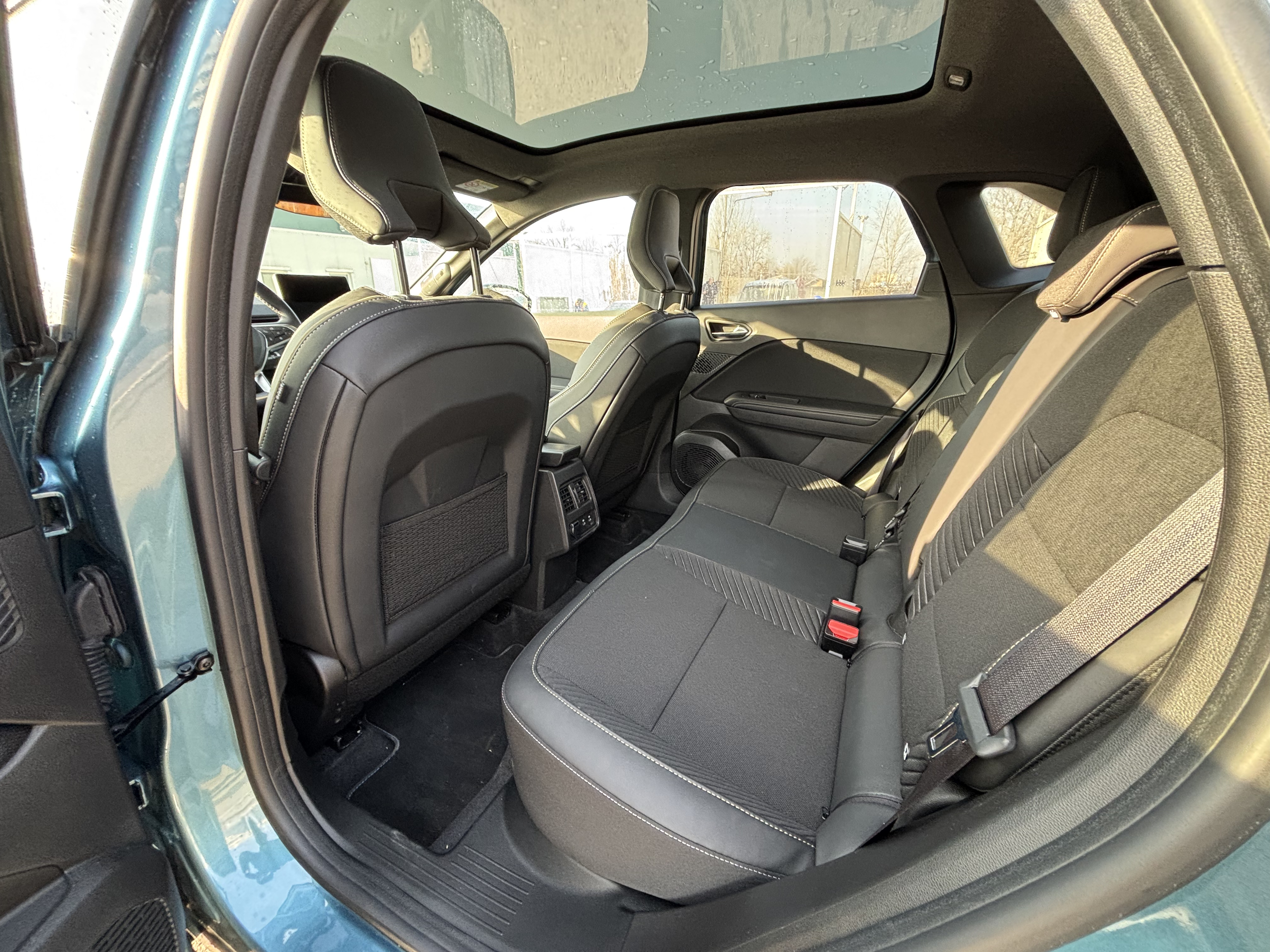
Backseat slided towards the back
Obviously, if needed, the backseat can be folded like in any modern car, but honestly, the fact that it slides can be very useful in itself. I would have liked it very much last year in my vacation, when I didn't have any passengers in the backseat, but more luggage than I could fit in the not-so-small Logan.
Very spacious on the inside, but with an older-looking design
Of all the modern Renault cars that I've driven so far, this is the first in which I've witnessed the older style design myself, which can be found on the Captur, as well, the one with the erecting tablet in the center and the older ventilation grills. Obviously, this is not a problem, because the materials are good quality, there isn't much hard plastic, as the car has textile materials and vegan leather and soft plastic, but perhaps the interior of the Scenic or the Rafale would have been more fitting.
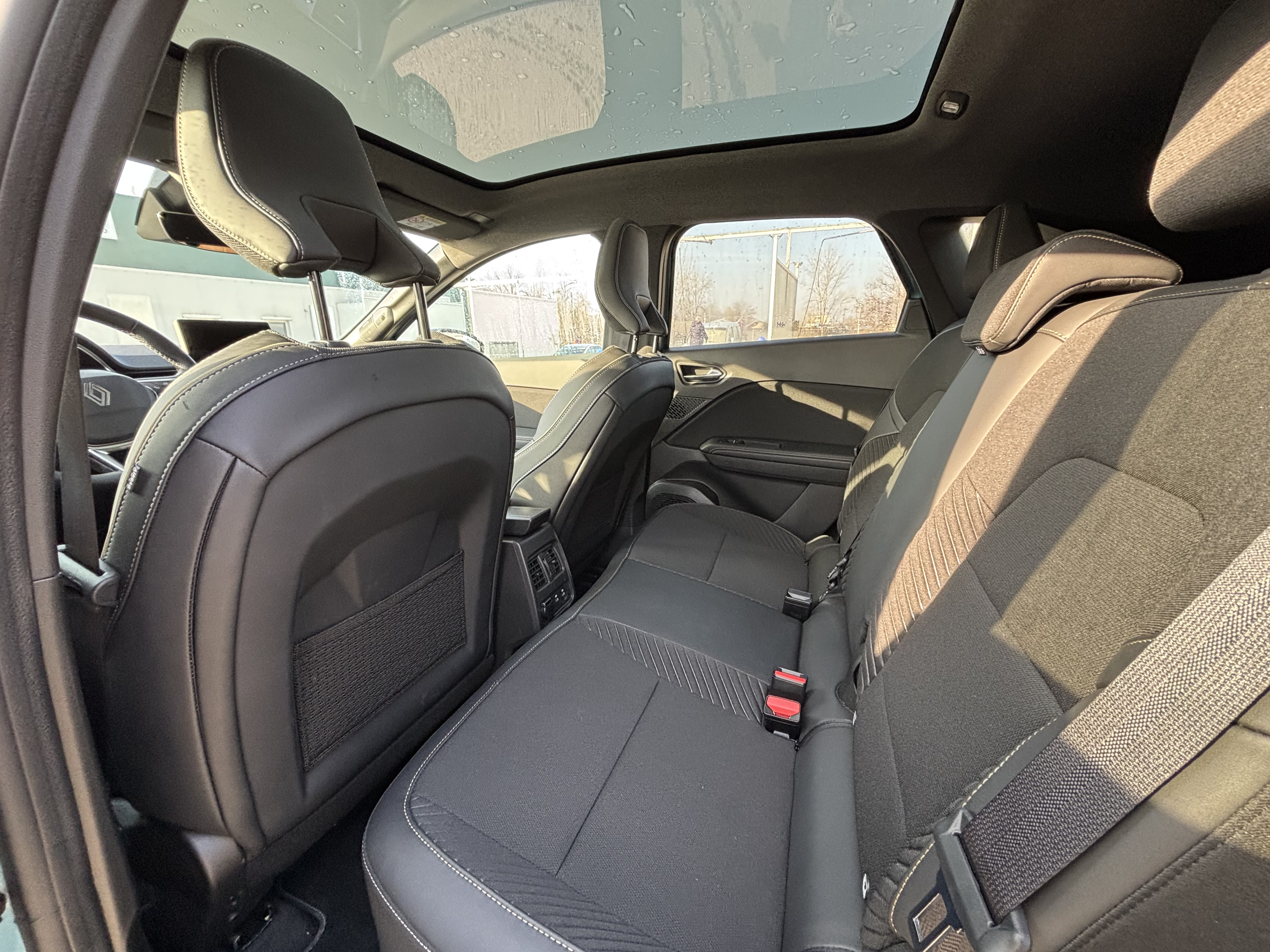
Backseat slided towards the front
The storage spaces on the doors, the glovebox and the armrest have decent to plenty of space and what I liked about the armrest is the fact that it can slide front-rear, so if you need to fasten your seatbelt quicker or you need to reach something in the two cupholders, you can quickly move it.
There are two USB-C ports and a 12V connector both in the front and in the back and the air conditioning system is a two-zone unit, while the front can be independently ventilated. The front seats and the steering wheel are heated and so is the windshield, which I appreciated after a -6 degrees Celsius night.
The seats are comfortable, textile and with vegan leather on the sides and are electric on the top-of-the-line iconic version that I've had for testing. Also, on the iconic version you'll have the SolarBay roof as standard, which can be made opaque or transparent, to let in more light and it can be adapted for the front passengers, the ones in the back or for everyone.
Symbioz makes you one with the road thanks to next-generation technologies
In spite of the slightly older-looking interior, there's nothing old about the technologies packed by Renault engineers in the Symbioz. The car offers all the standard safety features that you can find on pretty much any car these days, such as the lane-departure warning system, blind spot monitoring, emergency braking or pedestrian warning.
But I've been pleasantly surprised to find technologies that I didn't expect to see on a car that barely goes beyond 32.000 euros. For example, Symbioz has full 360 degrees cameras, so not just front and read, but also on its sides and even if they're not the clearest, you can definitely use them to make out the extremities of the car.
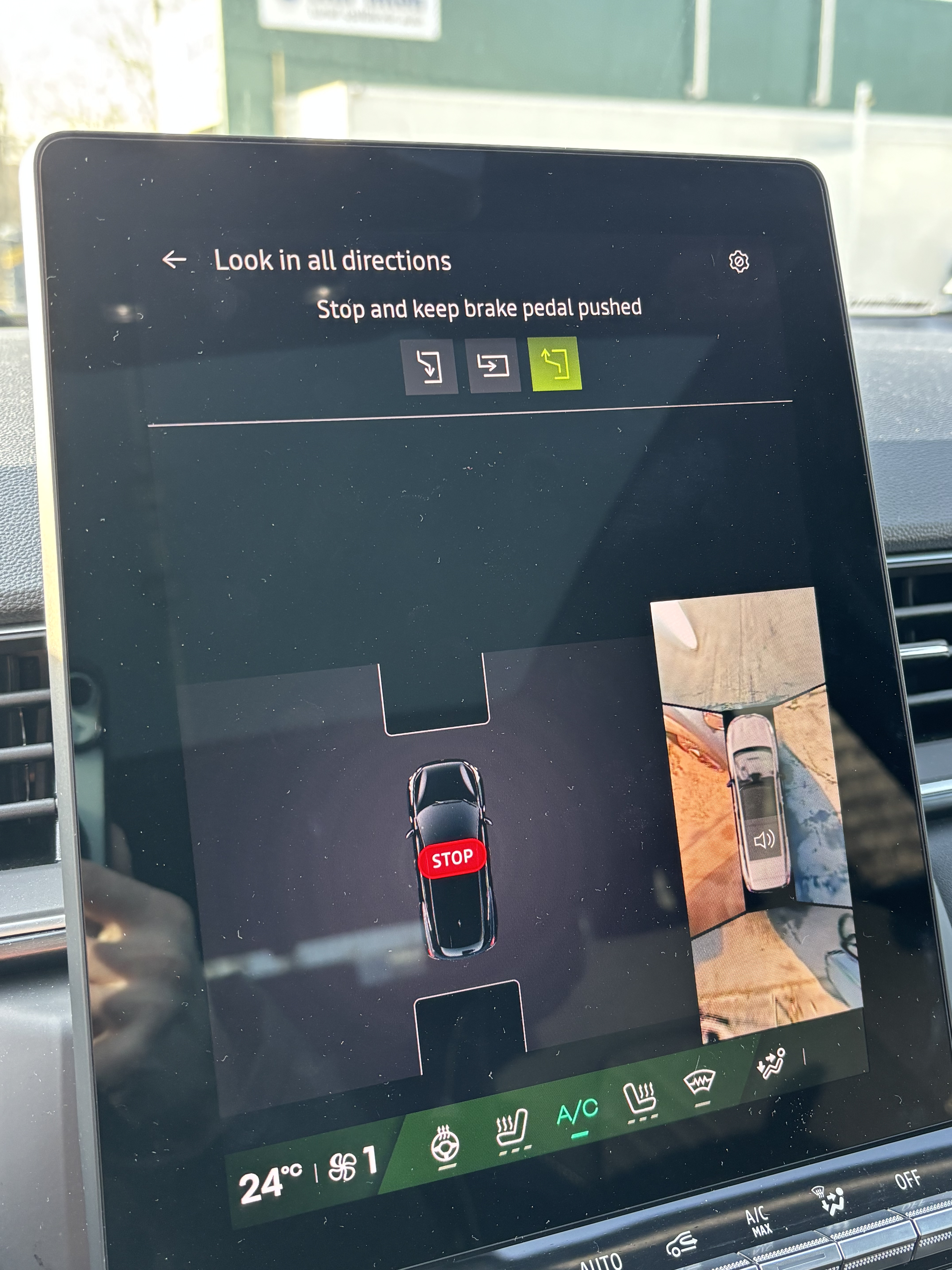
Another feature that derives from this system, as well as from the parking sensors that cover all the sides of the vehicle is the assisted parking system, allowing the Symbioz to park itself at 90 degrees or to do a full parallel parking and can even leave the parking spot itself. The condition is that the parking spot is well-marked on the road and for the other cars to be parked properly, of course.
The other driving safety features do their job more than well enough and will correct you if you leave your lane and if you veer too much towards the left side, it will warn you about a possible collision with an oncoming vehicle.
Software updates and the integrated Google
Sometimes the parking sensors activated on their own when I was waiting in traffic without any obstacle in the way, but maybe dust or some dirt played a role in that, so try and keep the sensors cleaned up just in case. Also, remember to always update your software for the best possible performance and for bug corrections. The car I've had for testing had a software update available to install, but which didn't mention anything regarding the parking sensors.
Otherwise, I will continue to applaud Renault's efforts to collaborate with Google to integrate Maps and to develop a very fluid operating system. If other manufacturers choose to use their own maps systems, which are not updated nearly as often as Google Maps, Renault made a smart move to integrate perhaps the most popular maps system in the world.
The car reads and displays all traffic signs, the road category you drive on, as well as the potential road events or road sectors that are currently under service, just like they appear on the Maps app. Of course, you can continue to use Waze for all its benefits and you also have the possibility to connect your phone through Android Auto or Apple CarPlay.
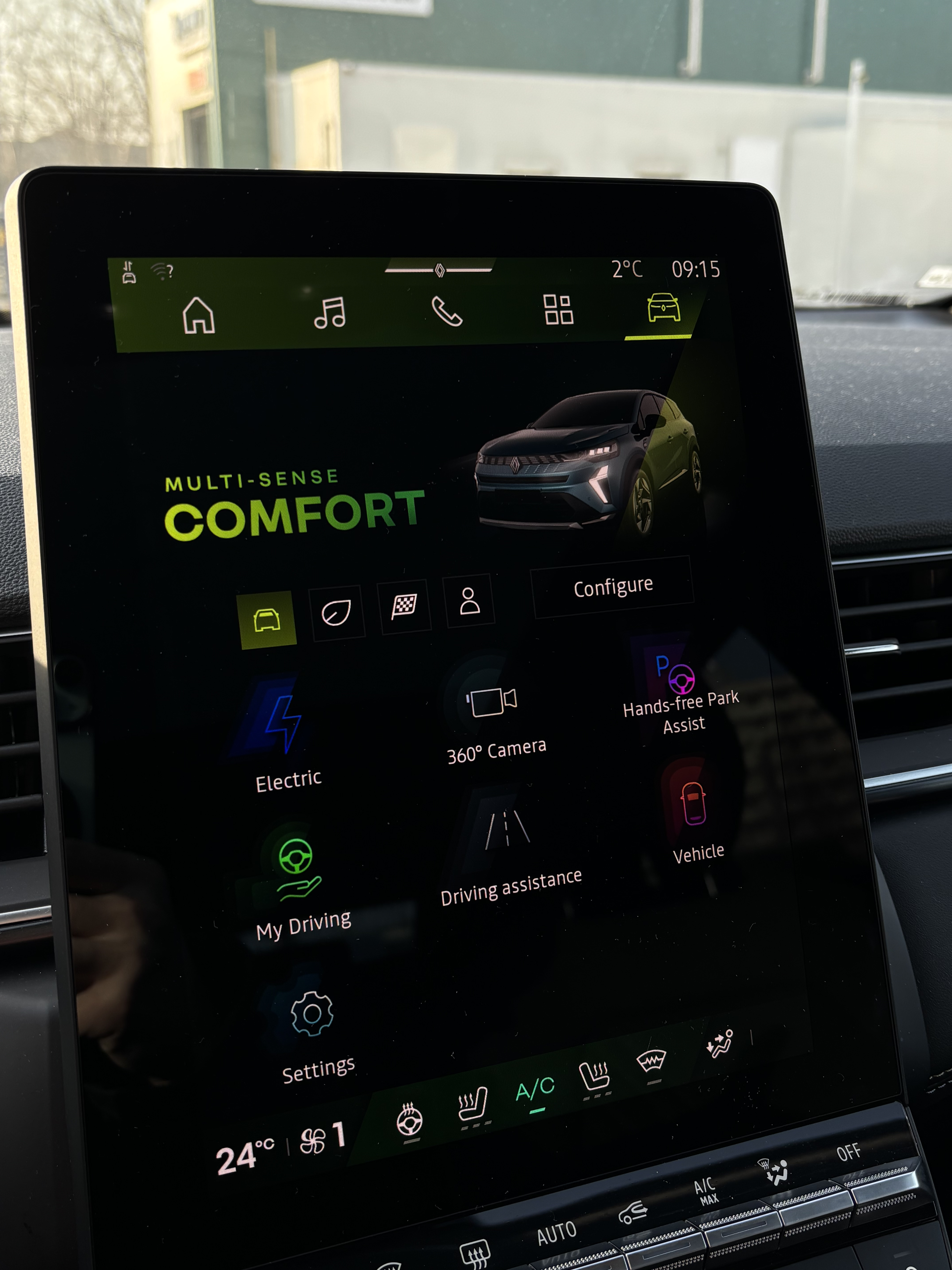
You can also install a variety of apps for multimedia, parking or driving purposes from the Google Play Store.
The audio system on the Symbioz is a Harman/Kardon unit with 9 speakers and 410 watts of power and it offers very good sound quality. It's not as powerful as on the Austral or the Rafale, which pack 12 of these speakers and a total power output of just under 500 watts, but it's more than enough here.
You can balance the sound yourself to drive the sound towards the back of the car, center it out or drive it completely to the front, via the two speakers mounted on the front pillars.
Renault collaborated with the famous electronic musician Jean Michel-Jarre to adjust the sound quality and the results can be heard. This is a very energic sound system, with a focus on bass, but which doesn't cancel out all the other frequencies, it's a pure joy to listen to music in the Symbioz and in fact, any other Renault model that integrates a Harman/Kardon branded sound system. From my experience, the "Club" preset was the most balanced with regards to the sound quality.
A familiar driving experience
For those that have read our previous test drives for Dacia and Renault models, there's no surprise here. It's a pretty agile car in the city, the steering is very soft and very low speeds and stiffens the more the speed increases.
The engine selection here is the same as on the Duster and the Jogger Hybrid, so a four-cylinder 1.6 liter naturally aspirated gasoline engine, combined with an electric motor that's connected to a 1.2 kWh battery, which produce 145 horsepower together. For speeds up to 50 km/h, the Symbioz tries to drive in electric mode only to reduce fuel consumption and emissions, and once going beyond 50 km/h, it will activate the gasoline engine almost every time, which can't be heard unless you press the accelerator harder. And if you accelerate harder, the car has plenty to offer, so overtaking is not a problem in this vehicle, but keep in mind the shifting pauses at 90 kilometers and 120 kilometers per hour.
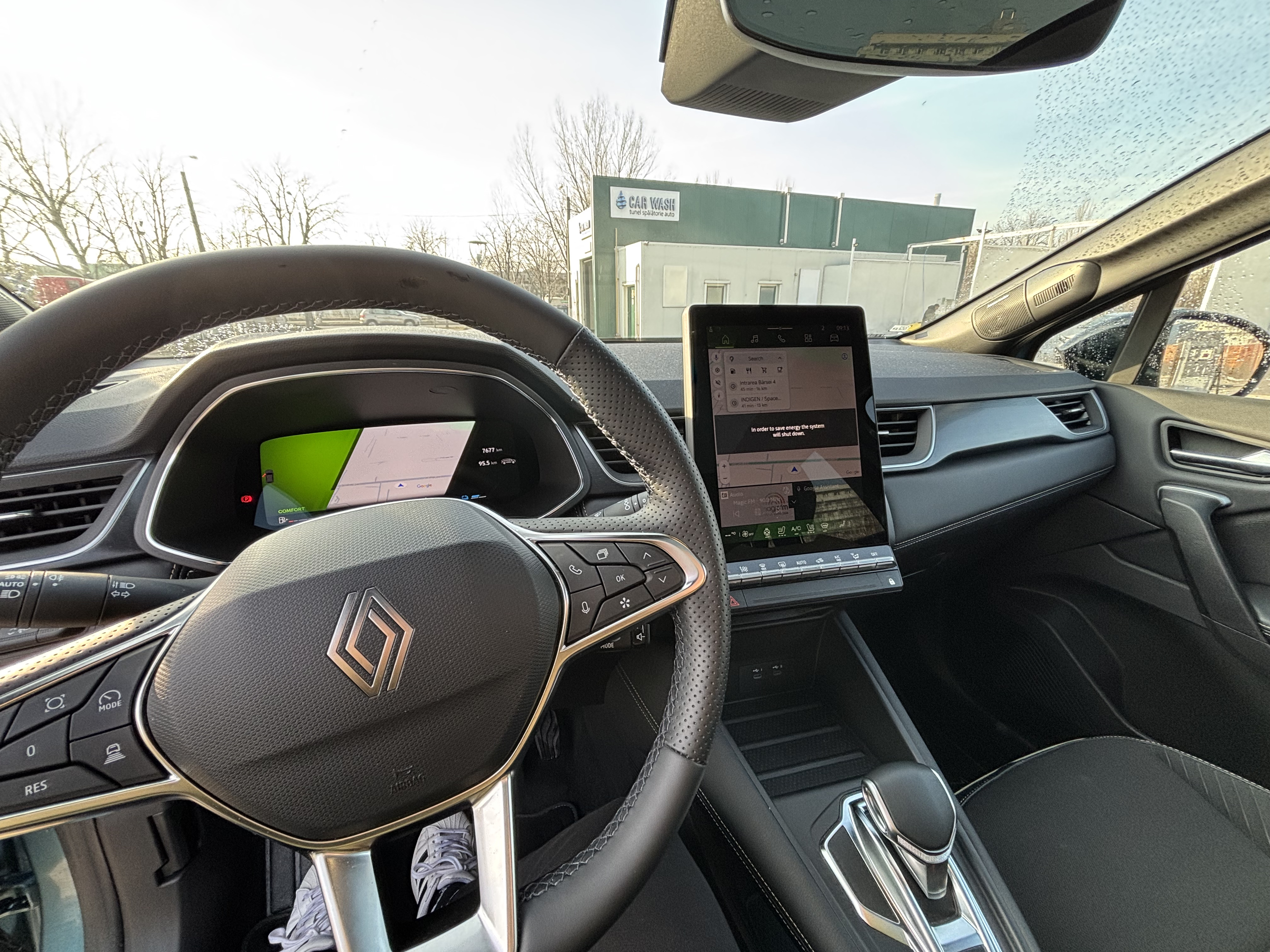
The soundproofing is good to very good in the Symbioz, better than on the Duster, but not as good as the one found on the Scenic E-Tech or the Rafale, although those are a bit pricier, too. The fuel consumption at the end of the test was 6.3 liter/100 kilometers, with a sportier driving style and quicker accelerations, as well as a permanently-functioning air conditioning due to the near 0 degrees Celsius temperatures.
Good comfort, regardless of the type of road you drive on
The car filters the road imperfections very well, but if you want to have the plushiest possible ride, I advise you to pick the smaller rims, because they pack more rubber. It's fairly stable around corners, but not as stable as the Scenic or the Rafale, just enough so that you can take on a winding road a little quicker, just don't go too fast into it, since the center of gravity and the road clearance are high.
Symbioz is surprisingly capable on the back roads, thanks to its ground clearance of 16.9 centimeters. Again, it's a very beautiful car, but it's not afraid to get in the action, if and when needed.
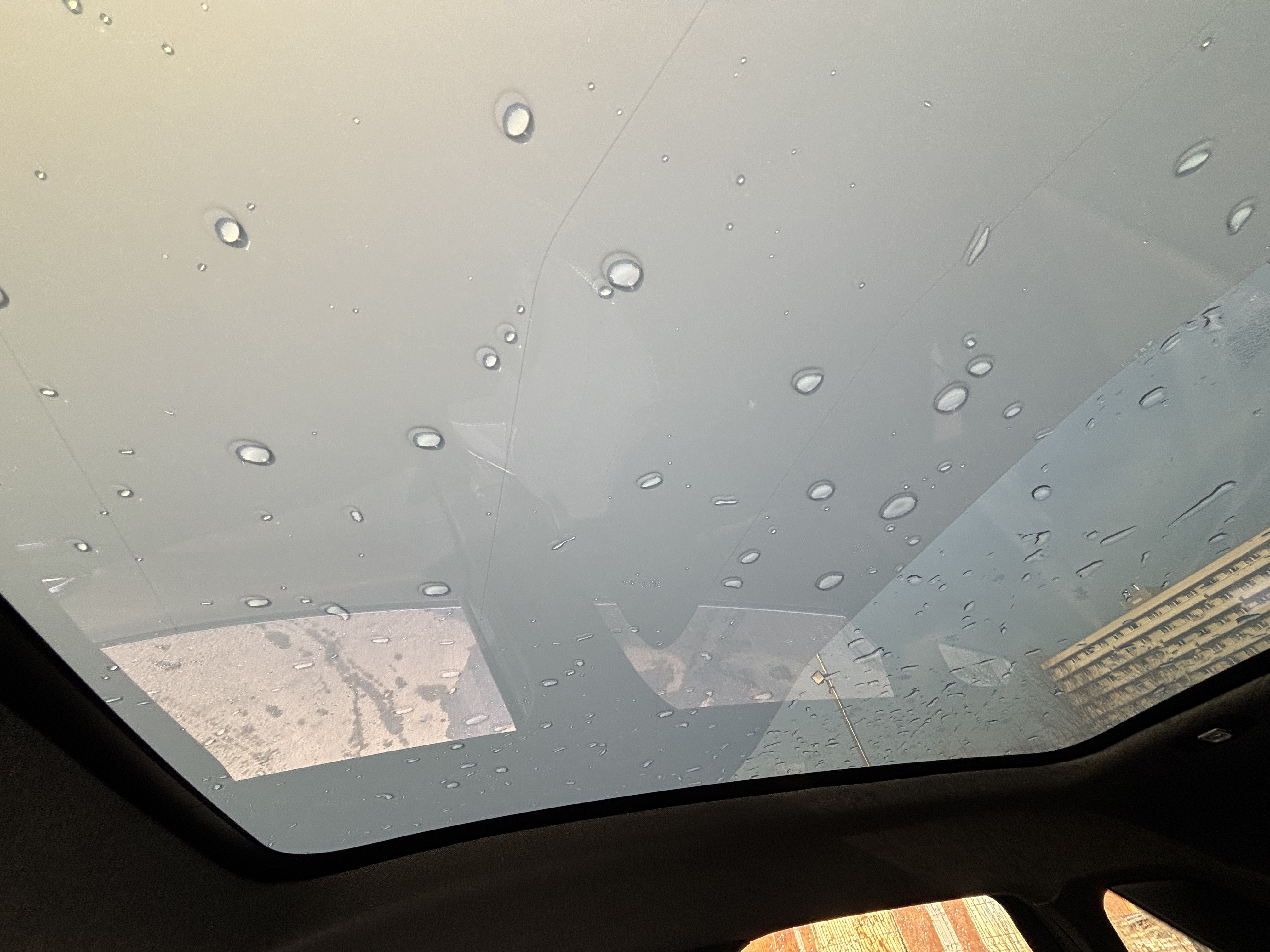
The SolarBay panoramic roof, opaque in the front and transparent in the back
What might be a little annoying at times is the right seat, as well as the B-pillar behind it, if you keep your backrest a little straighter, like I do, since it will be more difficult for you to see the oncoming traffic from the right side. You will have to look towards the front side, but if there's a passenger there, that might be a problem in itself.
Prices and conclusion Renault Symbioz
The Renault Symbioz is not just another SUV in the product range of the French company, but rather a car that can easily adapt to the use cases of even more drivers than other models, thanks to the sliding backseat, as well as the hybrid engine configuration, which is the only one to choose from. So, if for other models, such as the Duster or the Captur, you can say that it starts at "X" price, but you have to pay a few thousand euros more to get the hybrid engine, that isn't the case here.
Symbioz starts at 27.350 euros in its evolution version and can reach almost 33.000 euros in the top-of-the-line iconic version. Obviously, on the top version you get all the goodies, including the heated windshield, the SolarBay roof or the heated front seats. I would personally avoid the base version, because it comes with a smaller cockpit display that can't display as many things and also lacks the heated steering wheel or the seats.
If I was to choose, I would personally go at least for the techno version, which is 29.450 euros, because it offers the larger and more detailed digital cockpit and you can also add the parking pack with the 360 cameras, as well as the added driving safety features.
The Alpine version is positioned fairly oddly, because it costs 31.450 euros and if you have the money for it, why not add another 1.500 euros and get the iconic with all the options.
Overall, for the asking price even for the top configuration, I think that the Symbioz is an attractive car, because it is spacious, practical and offers all the technologies you need to be a safer driver, even if the interior is not the most modern of them.



Any thoughts?